Friday, 30 December 2022

Chocolate, Cheese, Ice-Cream and Fizzy Drink. Oh my.

This year sees the anniversary of several well-known food brands, and a few lesser-known ones. It turns out that some have been around for longer than you might imagine… others, not so much.

Philadelphia Cream Cheese started off life in 1872 in where else, but… errr… New York State. As sometimes happens, Philadelphia was an accident. In an attempt to make a crumbly French-style cheese known as Neufchâtel, too much cream was added which had the happy effect of making it easy to spread. Cream Cheese was born, and the Philadelphia brand became a success that is still widely enjoyed around the world today – although it has had many different owners during that time, today it is owned by Kraft.

Philadelphia Cream Cheese

A rather more polarising thing to spread on bread is Marmite. Introduced in 1902, this intensely savoury spread is made from yeast extract. More than something to put on your toast (or in a stew or casserole), Marmite also gives rise to a saying in British English that something is a “bit Marmite”, which means that people will either love it or hate it. The distinctive Marmite jars are shipped worldwide, and today the brand is owned by Unilever.

Marmite and toast
Marmite and toast

Yeast extract is a key ingredient in Twiglets, another British snack, introduced in 1932. Starting off life as a way to use up leftover dough, these unusual twig-shaped snacks are very savoury and are traditionally eaten at Christmas. Again, the brand has had a few owners and it is today a product of Jacobs, part of United Biscuits.

Two bags of Twiglets

The Mars Bar was invented in the same year – 1932 – by the British arm of Mars Incorporated. A worldwide success – with slightly different ingredients according to market – the British Mars Bar contains nougat and caramel coated in milk chocolate. The flavour of the bar is quite distinctive and has found its way into many authorised spin-off products. Somewhat less authorised in the artery-clogging deep-fried Mars Bar found in Scotland.

Partially-eaten Mars Bar

1932 was a good year for snacks. The Terry’s Chocolate Orange is another British product with strong sales around Christmas. Shaped like an orange, it consists of 20 segments of chocolate infused with orange oil, giving it a distinctive texture and taste. In order to separate the segments it needs to be hit on a hard surface first, giving way to the long-running advertising slogan “tap it and unwrap it”.  Traditionally made from milk chocolate, other varieties are available plus a chocolate bar. The Terry’s company has had several different owners over the years, including Kraft, but is now owned by Carambar and made in France.

Terry's Chocolate Orange

Skip forward thirty years to 1962 and another iconic chocolate product was created by British firm Rowntree. After Eight mints are very thin chocolate mints, containing a fondant filling and traditionally served in a small box with each chocolate in an individual sleeve. Unlike many chocolate products marketed at young people, After Eights were marketed to adults as an upmarket product that could be eaten after dinner with coffee. Today the product is owned by Nestlé and made in Germany.

Box of After Eight mints

Switching back to cheese from chocolate and moving away from big corporations, we come to Stinking Bishop. This aromatic (some might say “smelly”) soft cheese was originally developed in 1972 by Charles Martell. Produced from the milk of rare Old Gloucester cows, the distinctive smell comes from the cheese being washed with a locally-produced perry (pear wine) made with the Stinking Bishop pear. The “stinking” part of the name came from the nickname of the ill-tempered farmer who grew them. The cheese itself would have remained obscure, but it ends up as a key plot device in the 2005 movie Wallace & Gromit: The Curse of the Were-Rabbit. As a product it remains stubbornly unavailable in supermarkets, but can be found at cheese specialists, delicatessens and some high-end retailers.

Stinking Bishop cheese

One thing that goes nicely with a nice piece of cheese is some nice bread. One of the best-known types of bread worldwide is ciabatta. You might think that this is a traditional Italian product, but in fact it was only developed in 1982. This white bread is notable for its inclusion of olive oil, giving it a unique texture and taste. The bread was developed in response to the success of the French baguette which was taking over the Italian market, and became a worldwide success in its own right… one that you wouldn’t think was just 40 years old.

Slices of ciabatta
Slices of ciabatta

Something that sounds Italian but isn’t, Viennetta is a brand of ice-cream also introduced in 1982. Consisting of layers of rippled ice-cream with very thin layers of chocolate in between, the Viennetta is a high-distinctive looking product. Despite the name, Viennetta was developed in the UK by Walls and the brand is now owned by Unilever.

A very small Viennetta


Another brand that isn’t as old as you might think is Diet Coke, introduced in 1982 and the perfect thing to wash down some high-calorie ice-cream. Although the Coca-Cola Company had made a sugar-free cola since 1963 under the “Tab” brand, they wanted to keep the “Coke” name associated with their flagship product only. However, the success of rival Diet Pepsi led to a change of plans and Diet Coke was born. Diet Coke has a slightly different taste from normal Coca-Cola,  and in 2005 the company also introduced Coca-Cola Zero which has a taste closer to the original. Diet Coke (and similar products) are widely available, and are one of the few drinks you can reliably find if you want to avoid sugar.

Quite a lot of Diet Coke

Of course, other types of food are also available and you might want to balance out all the fat and processed ingredients with something healthy like a salad (invented some time in antiquity) and maybe a nice glass of water…

Image credits:
Philadelphia: POSt18 via Wikimedia Commons – CC0
Marmite: Rhino Neal via Flickr – CC BY-NC-ND 2.0
Twiglets: Adam Kuban via Flickr - CC BY-NC-ND 2.0
Mars Bar: Asim18 via Wikimedia Commons – CC0
Terry’s Chocolate Orange: Brett Jordan via Flickr - CC BY 2.0
After Eight Mints: Like_the_Grand_Canyon via Flickr - CC BY-NC 2.0
Stinking Bishop: Stephen Boisvert via Flickr - CC BY 2.0
Ciabatta: tuhfe via Flickr - CC BY 2.0
Vienneta: cyclonebill via Flickr - CC BY-SA 2.0
Diet Coke: Niall Kennedy via Flickr - CC BY-NC 2.0


Wednesday, 23 November 2022

Nokia 1011 (1992)

Introduced November 1992

Nokia 1011
Nokia 1011

The Nokia 1011 wasn’t the world’s first GSM mobile phone – that was the Orbitel TPU 901 – but that was always a bit of a niche product, and it was Nokia who took this technology and mass-produced it.

Nokia had been in the mobile phone business for a few years at this point. Starting off in wood pulp in the 19th century, Nokia had diversified into rubber, then electric cable, then electronics and by the 1980s, Nokia was a large industrial conglomerate. By the early 1990s, Nokia had started to focus on communications products – although mobile phones were more commonly branded “Mobira” rather than “Nokia”.


So when the Nokia 1011 was launched on 10th November (possibly the reason for the phone’s name) it was also sold as the Mobira Cityman 2000. Physically rather similar to Nokia’s analogue phones, the 1011 was a fully digital 2G GSM device. Compared to earlier networks, GSM offered better call quality, and it couldn’t be listened to by eavesdroppers. The 1011 also supported SMS (like the Orbitel), although you’d need to find someone with another SMS-capable phone to exchange messages.

It was a big and heavy device, coming in at nearly 500 grams. It was also massively expensive, costing 2470 Deutschmarks at launch (about £1000 at the time, or £2500 today). Prices very quickly dropped, however and in just a few years an equivalent model would only cost a few hundred pounds. The Nokia 1011 didn’t last long on the market either, being replaced two years later by the 2010 and 2110 devices.

If your mobile carrier still supports 900MHz GSM, then the Nokia 1011 should work today, with an estimated price of £300 or so if you can find one. It’s not really a practical device for everyday use, and it’s not really one of the more iconic Nokias either.. but it is one of the most important.

Image credits:
Nokia


Tuesday, 8 November 2022

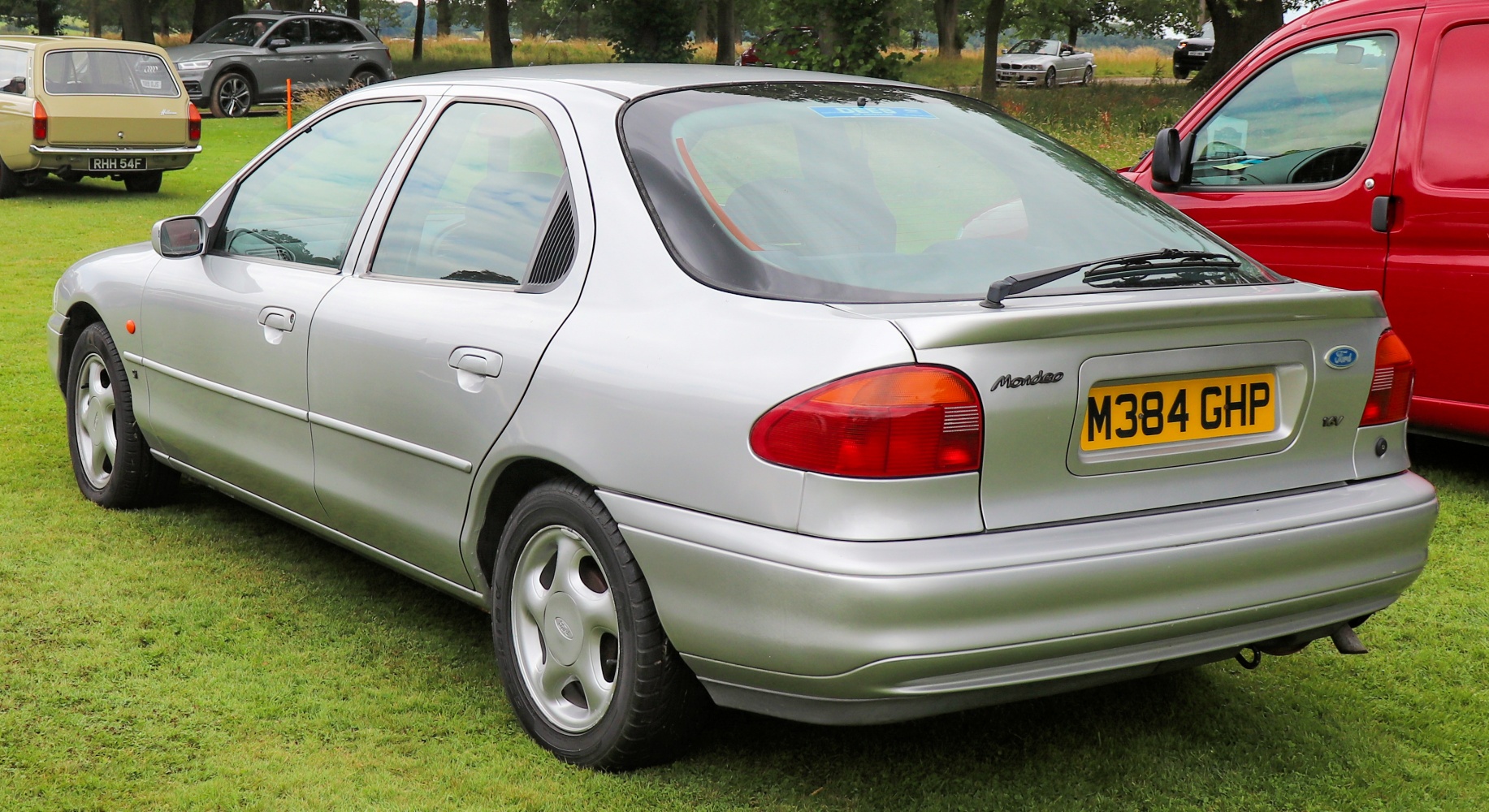
Ford Mondeo (1992)

Launched November 1992

A decade after the launch of the icon 1982 Ford Sierra, the Ford Motor Company was losing its way. Instead of being the engineering and design-led company that had been successful in previous decades, the beancounters had taken over and Ford’s cars in the late 1980s had a reputation for being built to maximise profit rather than for driver pleasure. This lack of attention to customer needs had a stark impact on the bottom line, Ford went from posting a record profit of $4.6 billion in 1987 to a record loss of $2.3 billion in 1991.

Changes were afoot though. Ford had started working on a replacement for the Sierra in 1986 – just four years after it launched – and six years and an astonishing $6 billion later they had the replacement, the Ford Mondeo.

The Mondeo was meant to be a world car (the Latin word for “world” is “mundus”) which could be sold in every market on earth with minimum modifications. At the time, Ford’s worldwide markets were fragmented with very different models which shared very little, apart from perhaps engines.

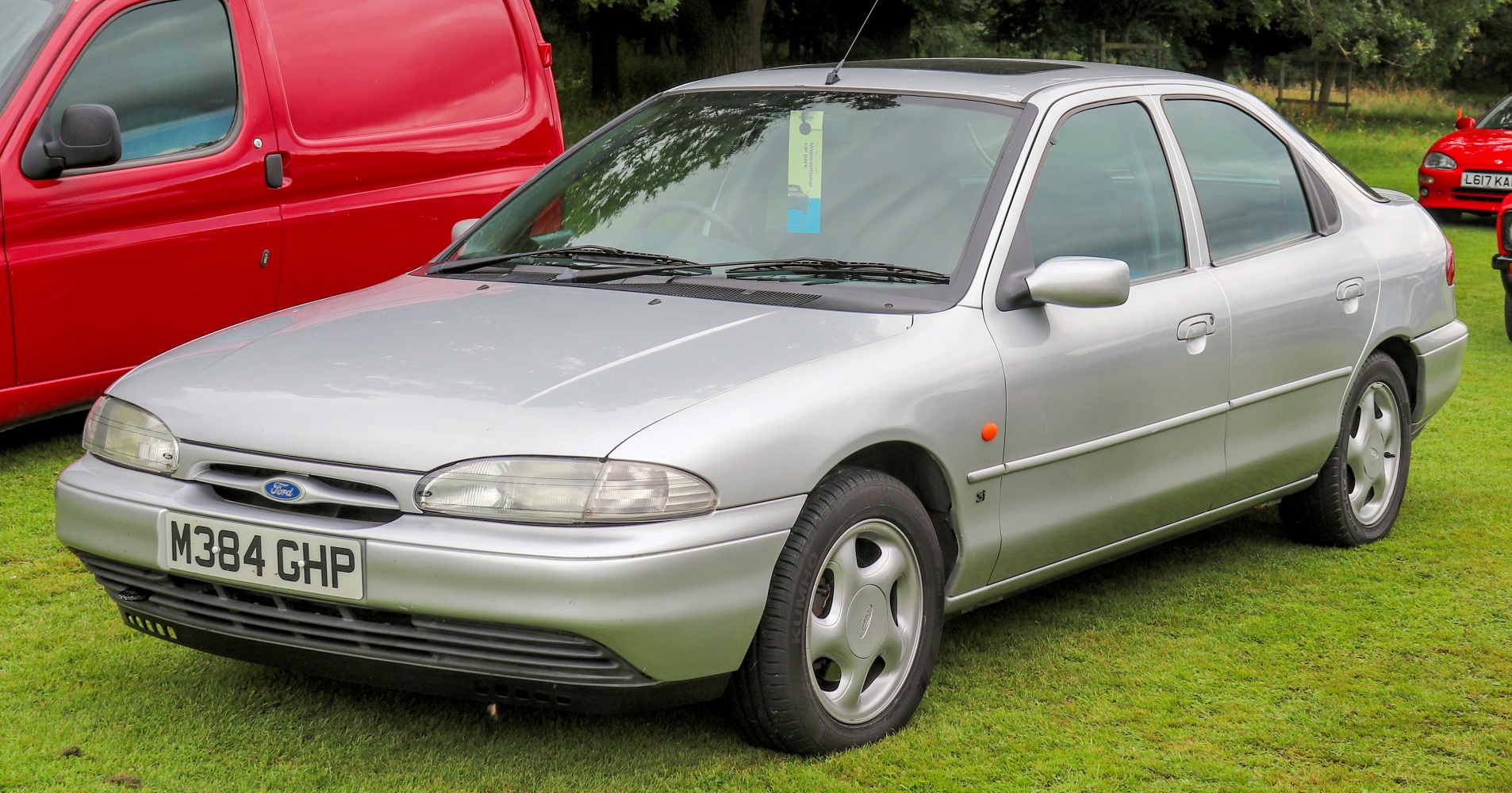
Early Mondeos were conservatively styled, but Ford became bolder with later models

Finally making the shift from rear-wheel drive to front-wheel drive, the Mondeo was somewhat conservatively styled for the early 1990s but did have the flexibility of coming in a hatchback, saloon or estate configuration at launch which was something the Sierra lacked.

Interior design was good for the time, and the Mondeo had excellent driving dynamics. It could also be loaded with the latest automotive technology – at a price – including traction control, a heated front windscreen, ABS and an airbag. The car was designed to take just about any engine from the Ford range, which meant that the engine bay was larger than some rivals which impacted on cabin space. Engine sizes varied from a basic 1.6 litre 90HP engine at launch to an impressive 202HP 2.5 litre V6 engine in the final year’s ST200 model.

The first generation of Mondeo lasted until 2000, with a substantial facelift in 1996 which replaced almost all the body panels, lights and grille and improved the interior. But it never quite got to be the world car it wanted to be – North American versions were heavily reworked into the Ford Contour and Mercury Mystique, but it went a long way to rationalising Ford’s fractured product range.

Perhaps unfairly sales reps sometimes called it the "Mon-dreary-o". But the higher the spec of Mondeo, the higher your rank as a rep.

The car was a significant success, particularly outside North America. In 2000 the second-generation Mondeo was launched, built on the same platform as the original but completely reworked with a more European flavour. The third generation was launched in 2006 and lasted another six years until 2012, when the fourth and final generation was launched. In 2022 Ford discontinued the Mondeo in worldwide markets, with the last one produced in March of that year.

After thirty years the Mondeo died, a consistently good car that lost sales to SUVs and crossovers. Although a fifth-generation Mondeo is built in China, it is not for worldwide markets. Indeed, the Mondeo isn’t the only Ford casualty to crossovers, the Ford Fiesta was also discontinued late in 2022.

Most early Mondeos are as cheap as chips, except for high-end models such as the ST200 which easily command prices north of £10,000. When you consider that the price for the current model of Ford Focus – one size down from the Mondeo – starts at an eye-watering £27,000 then perhaps that doesn’t seem so expensive…

Image credits:
Vauxford via Wikimedia Commons - CC BY-SA 4.0 [1] [2]


Saturday, 15 October 2022

Ford Sierra vs Mercedes-Benz 190 (W201) vs Citroën BX vs BMW 3 Series (E30) (1982)

Introduced September / October / November 1982

If you were looking for a classy family or small executive car in 1982, you were spoiled for choice. During the autumn of that year there were four models that came to market that helped to redefine motoring.

Ford Sierra

Cars of the 1970s and earlier tended to suffer from poor aerodynamics, being about as smooth as a brick. Best-selling models such as the Ford Cortina certainly looked the part in design terms, they had poor ergonomics and the high wind resistance contributed to poor fuel economy.

The Ford Sierra dropped the Cortina name and was utterly different to look at. A slippery design made it much more aerodynamic than its predecessor, and the liftback design gave much greater versatility than the Cortina’s saloon. Inside, the dashboard was centred around the driver, making  it very much a driver’s car. Higher-end models featured advanced electronics.

Three early models of Ford Sierra

Underneath the unconventional shell was a more conventional drivetrain using a traditional rear-wheel drive layout with some often quite elderly engines up at the front. At a time when cars in this sector were becoming front-wheel drive, it seemed a bit of a throwback.

It was a troubled car though. The “jelly mould” shape may seem more familiar today, but buyers in the early 1980s thought it went a bit too far – many still wanted a saloon rather than a liftback, and it took five years for Ford to come up with an answer to that. Conversely, the futuristic design may not have gone far enough, especially when it came to the traditional windows and rather ugly base model grille.

Sales were slow at first, but during 11 years of continuous development and product improvement, the Sierra turned into a remarkably successful car. It had a sound pedigree, with designers Uwe Bahnsen (designer of various generations of Capri, Escort, Fiesta and Cortina), Bob Lutz (BMW 3 Series, Ford Escort III) and Patrick Le Quément (Ford Cargo and later the Renault Espace, Avantime, Twingo and Megane).

The “jelly mould” certainly broke the mould of car design, although many elements look dated today. Despite being something of a design icon, the Sierra suffers from being relatively unloved. In the UK there were still a million on the road in 1995, but today it’s just a paltry 2000 or so. When was the last time you saw one in the wild?


Mercedes-Benz 190 (W201)

Like the Sierra, the Mercedes-Benz 190 was part of the so-called D Segment of cars. Unlike the Sierra, the 190 had a very different design philosophy.

It was – at the time – the smallest car ever made by Mercedes whose previous “smallest” model was the W123 luxo-barge. The 190 took all of the stylistic cues of the whole Mercedes range and subtly smoothed them out into something that could be quite understated and modern.

A trio of Mercedes-Benz 190s

The elegant looks of the 190 were mostly down to Bruno Sacco who was responsible in part for almost every Mercedes from the 1970s to 1999. The 190 helped to create a Mercedes house style that still persists today, especially espousing the concepts of “horizontal homogeneity” (where all cars in the range share identifiable styling features) and vertical affinity (where the design is not rendered obsolete or out-of-date by its successors). This meant that the 190 and the cars that followed were all immediately identifiable as Mercedes, but none ever looked old-fashioned.

A huge range of models followed, from reliable executive cruisers that could eat up the motorway miles to complete turbonutterbastard models powered by a Cosworth engine. Despite the more traditional design than the Sierra, the 190 was about as efficient when it came to aerodynamics.

The 190 is a car that aged very well. In not trying too hard to be fashionable, it still looks quite contemporary. Like the Sierra, it had an 11-year production run – but although it was quite an uncommon car at the time, there are now more 190s – around 2900 – on the road than Sierras..

Citroën BX

The Sierra broke new ground in design, the 190 modernised the traditional… but those weren’t the only options. French manufacturer Citroën always had an eye for quirky, non-traditional designs and the BX was certainly one of those. All straight lines and radical angles, the BX appealed to those who wanted something different.

As with the other cars, the BX had a legendary designer – in this case Marcello Gandini who designed high-end cars for Lamborghini, Maserati, De Tomaso, Alfa Romeo, Iso, Lancia and more affordable vehicles for Fiat and the timeless Renault 5 Supercinq. In this case, the BX was directly influenced by two prototype designs, the Reliant FW11 and the Volvo Tundra.

Late model 16V Citroën BX

A very lightweight design with a large number of plastic body panels, the BX had a drag coefficient even lower that the Sierra and standard 190 models. A high variety of engines filled out the range, including a Group B rally car. More mundanely, the BX was a popular estate car. And unlike the other cars mentioned here, the BX was a modern front-wheel drive layout.

The BX logically fitted in a range below the shark-like CX and above the AX supermini. This classic range of Citroën cars only coexisted for 3 years in the later 1980s, after which Citroën slow slipped into more boring designs. However, today the BX still looks fresh and doesn’t seem to have dated as much as competitors from the same era. However, it hasn’t survived well and there are just a few hundred examples on British roads today.

BMW 3 Series (E30)

The BMW 3-Series had been around for a generation by 1982, but the second-generation E30 is quite possibly the quintessential 3-Series design. A smoothed-off version of the previous E21, the E30 was sleeker and more elegant while retaining a timeless BMW design. Of all the cars mentioned here, the E30’s understated looks probably make it the most modern of the four.

During twelve years of production, the E30 had engines ranging from the sedate and economic to the insanely fast fitted. Apparently, the E30 did also include indicators although these were seldom used.

BMW 3-Series (E30)
BMW 3-Series (E30)

Again, the pedigree of the designers was excellent, with Claus Luthe and Boyke Boyer having a hand in almost everything BMW designed during this era. Elegant both inside and outside, the E30 is one of the high points of BMW styling. Modern BMWs look rather like they have been drawn by a lunatic with a box of crayons, so it’s difficult to understand how they have fallen so far.

Out of all of them though, the E30 is the most common sight on British roads with around 3800 still registered. If in good condition, the E30 is a timelessly stylish as a good suit or a nice pair of shoes. There are around 4000 E30s still left on UK roads.

All four cars were distinctive in their own ways and influenced vehicles that came afterward. Many are highly desirable – high-end Ford Sierra Cosworths can easily cost the best part of £100,000 or more – but more mundane models also have their charms.

Do any of them really look forty years old? The Sierra perhaps has dated more than most, despite being the most futuristic looking. The BX still looks fresh and not a million miles away from some of the things on the market today. The Mercedes and BMW have aged very gracefully. Which one would you choose?

Image credits:
Wouter82 via Wikimedia Commons - CC BY-SA 4.0
Alexander Migl via Wikimedia Commons - CC BY-SA 4.0
Keith Adams via Wikimedia Commons – CC0
Johannes Maximilian via Wikimedia Commons - CC BY-SA 4.0


Sunday, 28 August 2022

Dragon 32 (1982)

Introduced August 1982

By 1982 the home computer market in the UK was getting quite sophisticated with the BBC Micro, Sinclair ZX Spectrum and Commodore 64 all competing for attention. To compete with these three extremely capable systems you were going to need something very good indeed. The Dragon 32 was not that computer. Not by a long chalk. Yet somehow it managed to carve out a fairly respectable slice of the market for a couple of years, and it all started so promisingly.

Dragon 32

British toy firm Mettoy – manufacturer of Corgi Toys – had spotted that children were becoming increasingly interested in computers and decided to enter the market, creating a factory in Wales to build the Dragon. Mettoy knew a lot about marketing and distribution, and in particular it understood export markets. However, Mettoy got into technical difficulties and the Dragon Data business ended up under the control of the industrial giant GEC.

The Dragon 32 itself was based on a Motorola reference design and used their 6809E processor, rather than the more common Zilog Z80 or MOS 6502s that rivals used. The dragon wasn’t the only machine built to the same basic design – the TRS-80 Color Computer (CoCo) launched in the US two years earlier was very similar and was somewhat compatible when it came to software.

Making a sort-of-clone of a two-year old computer in 1982 – when technology was moving at a breath-taking rate – may not have been a great start, but the 6809E was a capable CPU, the machine was very well built and you could connect up joysticks, a printer and a decent monitor. RAM was 32KB, a so-so amount for the time (a later 64KB version, the Dragon 64 was launched not long after) and it had simple sound capabilities. The inbuilt Microsoft BASIC was pretty good to program, which was one of the main things people liked to do in those days. Software could be ported across from the CoCo with a few modifications.

Dragon 64 in use
Dragon 64 in use

On the more negative side – the graphics were terrible, especially when it came to the colour palettes. The Dragon was also incapable of displaying lowercase characters without modification, which limited its appeal as an educational or business computer, and you couldn’t easily mix text and graphics at the same time. Although the Dragon 32 was popular enough to have many best-selling games titles ported to it, the poor graphics meant that they didn’t look as good as games played on rival machines.

Overall it wasn’t a bad system, but it was up against more capable competition. It might have been a contender but by 1983 the home computer market was imploding, with an oversupply of systems, brutal price wars and a fragmented array of available systems that frankly needed shaking out. Dragon Data was one of the victims, going bust in 1984, but the assets being bought up by a Spanish company named Eurohard which sold the product line until 1987, when it too went bust.

Despite market failures, the Dragon 32 retains a following in the hobbyist market with many additional modifications including improved operating systems and peripherals, including modern add-ons such as memory card readers in lieu of tape or disk drives. Working systems can command prices in of a few hundred pounds, depending on condition and accessories.

Image credits:
Liftarn / Pixel8 via Wikimedia Commons – CC BY-SA 2.0
Rain Rabbit via Flickr - CC BY-NC 2.0


Wednesday, 24 August 2022

Commodore 64 (1982)

Released August 1982

This – ladies and gentlemen – is the big one as far as 8-bit computers go. The biggest-selling single model of computer of all time, and a system that had success worldwide and is still remembered fondly today. I give you… the Commodore 64.


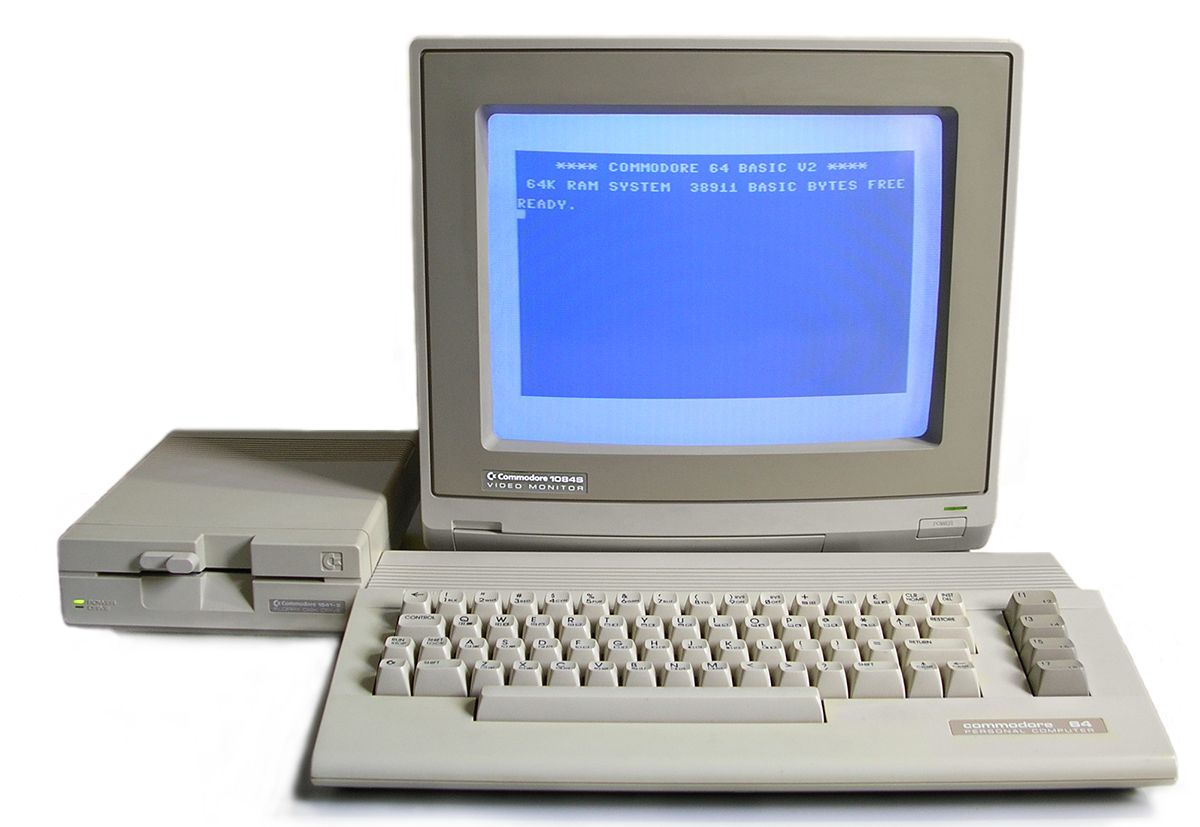
Commodore 64 original "breadbin" case


At first glance, the C64 is difficult to tell apart from the previous year’s VIC-20 as it shipped in a near-identical case at first. Inside though this was a much more powerful machine, running on a MOS Technology 6510 CPU, essentially a custom version of the popular 6502. The “64” in the Commodore 64 name comes from the amount of available RAM. The C64 used clever paging techniques where the CPU can page between ROM and RAM and rearrange most of the computer’s internal memory map to maximise available memory. This sophisticated scheme gave programmers much more RAM to play with than the competition who mostly used a flat memory configuration where ROM and RAM had to share the same space.

Graphics were a huge improvement over the VIC-20, with 320 x 200 pixels in 16 colours plus sprites, controlled by the MOS VIC-II graphics processor. Another MOS chip, the 6581 sound generator, gave multichannel sound. There was a built-in joystick port. By default the C64 shipped with a tape drive, or you could add on an incredibly slow floppy disk or the IEEE 488 serial bus which also supported printing. The hardware was subject to constant revision which sometimes produced compatibility problems.

Software support was excellent, with around 10,000 titles produced during the lifetime of the machine. Initially some of this shipped on a ROM cartridge, but this had a limit of just 16Kb so eventually tape became more common for complex games. In terms of games, few platforms even game close to the C64.

Excellent software and hardware made it an attractive proposition, but Commodore were keen to make this as affordable as possible. The initial launch price of $595 continually dropped, reaching $300 by 1983 (with cheaper deals available if you shopped around), easily undercutting the Atari 400/800, Apple II and crucially the Texas Instruments TI-99/4A.

There was a lot of bad blood between Commodore and Texas Instruments... TI had nearly bankrupted Commodore in the 1970s during the pocket calculator wars. Commodore boss Jack Tramiel wanted revenge, firstly the low-end VIC-20 piled on the pressures and the price-cutting on the Commodore 64 forced Texas to sell their system at a huge loss in order to compete. Not only did this force Texas to crash out of the home computer market, but it also inadvertently started a huge shake-out in the home computer market too.

If you were a teenager in the UK at the time, you would probably have had endless playground arguments comparing the Commodore 64, Sinclair ZX Spectrum and BBC Microcomputer. The argument could never be won because – in retrospect – all three platforms were really good and had their own strengths and weaknesses… but try telling kids that.

Sales were strong throughout the 80s, but competition grew tougher. Commodore attempted to diversify the C64-based offerings, notably with the luggable Commodore SX-64 (the first colour portable computer), the wedgy Commodore 64C and Commodore 128 plus an unsuccessful attempt at a games console with the Commodore 64GS.

Commodore 64C in the "wedge" case

At least 12 million Commodore 64 units were shipped up until 1994, only stopping when Commodore folded that same year. Over 12 years of production, the C64 was a massively influential machine – even today. Modern clones such as The C64 carry the torch, or used systems can typically be had for a few hundred pounds. Alternatively there are software emulators available. There's no doubt that even 40 years after launch, the C64 still has its fans.

Image credits:
Evan-Amos via Wikimedia Commons – CC0
Bill Bertram via Wikimedia Commons - CC BY-SA 2.5


Saturday, 16 July 2022

Grundy NewBrain (1982)


Launched July 1982

Largely forgotten today and not even very well remembered at the time, the Grundy NewBrain is one of those microcomputers that could have been a contender in the early 1980s personal computer market.

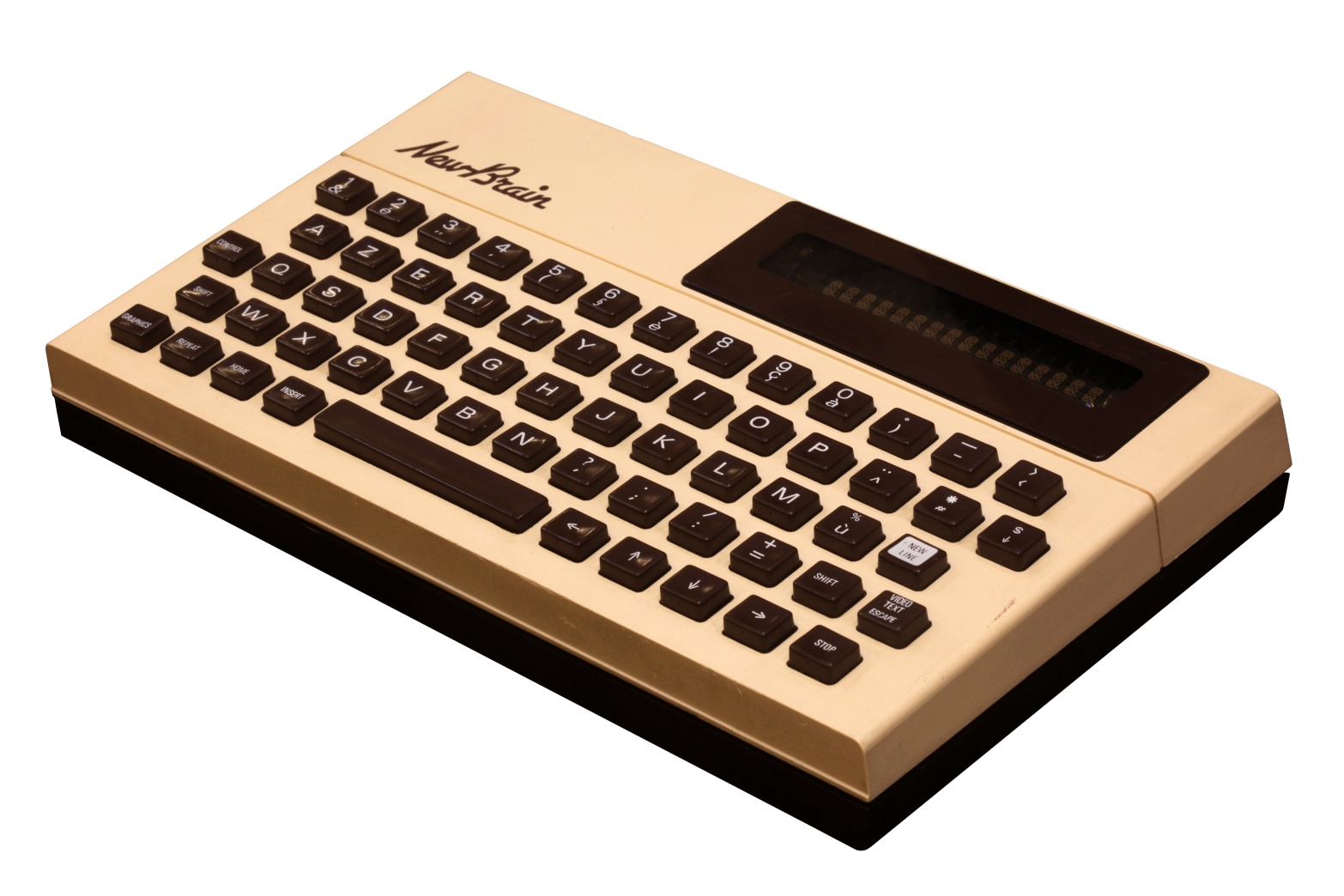
A compact Z80-based machine, the NewBrain featured exceptionally accurate floating point numbers and very high resolution monochrome graphics, which made it attractive to scientists and engineers. It could output to a monitor and TV, and interestingly most models sold had a 16 character display built into the case itself. Internal memory was split between 32KB of ROM and 32KB of RAM, a typical configuration. Additional paged memory could be added in 64KB blocks, theoretically giving a maximum of 2 megabytes. Expansion options included printers, disk drives and pretty much everything you’d expect for a microcomputer of this era. A portable version was also produced, utilising the inbuilt display plus a battery. The compact size of the NewBrain was due in part to a complex multi-layered motherboard that you tinkered with at your peril.

Grundy NewBrain
Grundy NewBrain

The hardware is pretty interesting, but the story of the development and eventual demise of the NewBrain is a slice of 1980s technology drama. Originally, the NewBrain was a project at Sinclair Radionics who were looking for a low-cost competitor to the Apple II. However, Sinclair Radionics were looking at a sub-£100 machine and the NewBrain was never going to be that cheap to build. Instead of going forward with the NewBrain, Clive Sinclair instead developed the ZX80 under his other company, Science of Cambridge.

Sinclair Radionics found itself in financial difficulties. This original Sinclair company had developed small radio sets and pocket calculators, but the money ran out and Radionics was rescued by the National Enterprise Board (NEB) who transferred the NewBrain to another NEB-owned company, Newbury Labs.

About this same time, the BBC was starting work on its computer literacy project, which would involve partnering with a manufacturer to create the BBC Microcomputer. The BBC was steered in the direction of the NEB-owned NewBrain which certainly ticked most of the boxes. It should have been a done deal, but when the BBC came calling the NewBrain wasn’t ready… and rival manufacturers had gotten wind of the BBC Micro and had insisted that they be allowed to tender. In the end, Acorn won the tender and their version of the BBC Microcomputer was born.

Grundy NewBrains with and without integrated displays

So, the NewBrain missed out on being both a Sinclair machine and a BBC Micro. In the end it ended up with a rather obscure company called Grundy Business Systems, who Newbury Labs sold the design to. It wasn’t an immediate market success, but it looked promising. So promising in fact that Grundy built a lot of them… but the hoped-for sales didn’t appear and by 1983 Grundy was in serious trouble. Essentially by 1983 it was all over, most remaining stocks were liquidated and the NewBrain ended up as a casualty of the early 1980s microcomputer crash.

Although it was a limited success in the UK, it was rather more successful in the Netherlands, Denmark, Greece and – for some reason – Angola. Had it been ready when the BBC were interested then it might have been the first of a series of machines, but in the end the NewBrain’s potential was never realised.

Today these are highly collectible machines, with working systems often commanding prices of £1000 or more. Alternatively, if you are a former NewBrain owner and want to rekindle old memories, then an emulator is available.

Image credits:
Rama & Musée Bolo via Wikimedia Commons - CC BY-SA 2.0 FR
Marcin Wichary via Flickr - CC BY 2.0