Showing posts with label 1990s. Show all posts

Wednesday, 23 November 2022

Nokia 1011 (1992)

Introduced November 1992

Nokia 1011
Nokia 1011

The Nokia 1011 wasn’t the world’s first GSM mobile phone – that was the Orbitel TPU 901 – but that was always a bit of a niche product, and it was Nokia who took this technology and mass-produced it.

Nokia had been in the mobile phone business for a few years at this point. Starting off in wood pulp in the 19th century, Nokia had diversified into rubber, then electric cable, then electronics and by the 1980s, Nokia was a large industrial conglomerate. By the early 1990s, Nokia had started to focus on communications products – although mobile phones were more commonly branded “Mobira” rather than “Nokia”.


So when the Nokia 1011 was launched on 10th November (possibly the reason for the phone’s name) it was also sold as the Mobira Cityman 2000. Physically rather similar to Nokia’s analogue phones, the 1011 was a fully digital 2G GSM device. Compared to earlier networks, GSM offered better call quality, and it couldn’t be listened to by eavesdroppers. The 1011 also supported SMS (like the Orbitel), although you’d need to find someone with another SMS-capable phone to exchange messages.

It was a big and heavy device, coming in at nearly 500 grams. It was also massively expensive, costing 2470 Deutschmarks at launch (about £1000 at the time, or £2500 today). Prices very quickly dropped, however and in just a few years an equivalent model would only cost a few hundred pounds. The Nokia 1011 didn’t last long on the market either, being replaced two years later by the 2010 and 2110 devices.

If your mobile carrier still supports 900MHz GSM, then the Nokia 1011 should work today, with an estimated price of £300 or so if you can find one. It’s not really a practical device for everyday use, and it’s not really one of the more iconic Nokias either.. but it is one of the most important.

Image credits:
Nokia


Thursday, 23 June 2022

Jaguar XJ220 vs McLaren F1 (1992)

Launched 1992

If you wanted a really fast British supercar in 1992 and you have about half a million pounds in your pocket, you had an intriguing choice between the Jaguar XJ220 and the McLaren F1. Thirty years later, one of these cars is considered to be a success and one a relative failure. But which is which?

Let’s start with the Jag. By 1992, Jaguar was owned by Ford but had spent the previous few years struggling with a range of increasingly elderly cars. However, a successful foray into racing (largely thanks to TWR) had resulted in a supercar project… not just any car, but a street-legal machine capable of hitting 200 miles per hour.

The concept version of the car caused a shockwave. An all-wheel-drive sports car powered by a mighty 6.2L V12 engine mounted in the back, this version of the XJ220 also had scissor doors and the slippery design made it look like no other Jag. The “220” part of the name was the top speed that Jaguar was hoping for and despite the then eye-watering price tag of £470,000 there were 1500 people who put down a deposit.

Jaguar XJ220 - not your grandfather's Jag

Between concept and product though there were several changes. Perhaps the most significant was the engine. The V12 that Jaguar had proposed was big and heavy and also had problems meeting emissions standards, but Jaguar had ended up with the rights to the engine in the short-lived but legendary MG Metro 6R4 rally car. The 6R4 had a relatively lightweight V6 unit somewhat inspired by the (also) legendary Rover V8. It was a promising engine for Rover, but Group B rallying was banned in 1986 after a series of accidents, and the 6R4 and its engine became essentially redundant. Jaguar took the 6R4 V6 and thoroughly reworked it, adding twin turbos in the process, giving about 542 horsepower. It was arguably a better engine than the V12, but people were expecting a V12 and not a V6. In addition, one other major change were the door – the scissor doors were dropped in favour of more conventional ones, and the car moved to a simpler rear-wheel-drive configuration. Many customers were very unhappy, and these changes plus a recession in the early 1990s led to many cancellations.

The XJ220 was extremely aerodynamic, including the underneath of the car. Body panels and the chassis were made from aluminium. Advanced technologies could be found everywhere from the braking system to the transmission… Jaguar were not short changing customers on kit. Being a Jag, the inside was a lovely place to be. Top speed was around 212 MPH, not quite as much as the 220 in the name, but nonetheless blisteringly fast.

The XJ220 concept had a massive V12 engine, the production car a more compact V6

The bad points? Well, it was more than two metres wide and lacked power steering and ABS, so it wasn’t much fun as a daily driver. There was also limited luggage space (despite the huge size) making it impractical as a grand tourer as well.

It wasn’t a sales success – Jaguar had never intended it to be a high-volume car, but with just 281 built they fell short of their targets. It did help to raise Jaguar’s profile as a sports car manufacturer, but ultimately the XJ220 was a little too flawed and compromised. The XJ220 was in production for just two years – and Jaguar never made another production car that was anything like it afterwards.

At around the same time, McLaren were developing their first road car around similar themes. A bit more expensive than the XJ220 at £540,000 (in 1992 money), the McLaren F1 wasn’t saddled with the compromises that the Jaguar possessed. The F1 was powered with a normally aspirated (i.e. not turbocharged or supercharged) V12 like the XJ220 concept. McLaren chose the normally aspirated route for reasons of control and predictability – early 1990s turbochargers gave uneven power and suffered from turbo lag, so a normally aspirated engine was much smoother. McLaren shopped around for a suitable V12 eventually settling on a power plant made by BMW.

The McLaren F1 would look fast parked up in Sainsbury's

The body of the F1 made extensive use of carbon fibre, except for the engine bay which has gold foil acting as a heat shield. A combination of other lightweight and strong materials are found throughout the car, including magnesium, Kevlar and titanium. The whole body shape produces downforce rather than having a fat spoiler, but one clever trick was the introduction of two fans in the base of the car with both produced extra downforce and cooling at the same time. The top speed? The McLaren F1 was (and still is) the world’s fasted normally aspirated car with a top speed of 240 MPH.

----

The McLaren F1's three seats practically make it an MPV

Inside the F1 is highly unusual, featuring three seats – the driver sits in the centre and slightly in front of the two passengers either side in the rear. Entrance to the cabin was through the dihedral (scissor-like) doors, something the XJ220 sorely lacked. Luggage compartments are hidden around the car, although best used with the proprietary matching bags. The F1 also included air conditioning and a number of other aids to make it usable on the roads, transforming the F1 into an almost practical grand tourer as well as a sports car. It wasn’t designed as a track car, but it was pretty good at that two with race variants such as the F1 GTR being made. 

----

The McLaren F1 looks purposeful from the back as it disappears over the horizon

However, despite the advanced engineering, only 106 cars were produced (including prototypes). McLaren did turn a modest profit on the F1 during the six years of production, ending in 1998. McLaren didn’t build another road car until 2011. Nonetheless, the F1 was an engineering success and it didn’t make the compromises that the XJ220 did.

Today a McLaren F1 is worth around £16 million, but an XJ220 is only worth about £450,000 – about the same as it was new in actual pounds, but adjusted for inflation the XJ220 cost around £1 million when new. According to collectors at least, the F1 is a far more desirable car.

Image credits:
Vauxford via Wikimedia Commons - CC BY-SA 4.0
Morio via Wikimedia Commons - CC BY-SA 3.0
Jaguar Cars MENA via Flickr - CC BY 2.0
Craig James via Wikimedia Commons - CC BY-SA 4.0
Ank Kumar via Wikimedia Commons - CC BY-SA 4.0
Neilhooting via Flickr - CC BY 2.0


Saturday, 7 May 2022

Orbitel TPU 901 (1992)

Launched May 1992

Early mobile phones were terrible things. Not only were they big and clunky, but the old analogue networks that they ran on had terrible call quality, poor reliability and were very insecure. These early technologies such as AMPS, TACS and NMT became retrospectively known as “1G” – these days often forgotten and unloved.

By 1992 these 1G networks had been around for a decade or so and their weaknesses were becoming obvious. The market was ripe for something better, and in 1992 the world’s first 2G GSM networks came online. These digital networks had better call quality, security and required a smaller slice of the radio spectrum, and the first certified GSM phone to be available was the Orbitel TPU 901.

Orbitel TPU 901

A bulky device even by the standards of the time, the 901 had a handset connected to the base station via a curly cord and it weighed a whopping 2.1 kilos. It wasn’t a big seller – smaller and cheaper GSM phones were not far off – but the Orbitel TPU 901 does have the distinction of receiving the world’s first SMS text message with the words “Merry Christmas” sent in December the same year.

Orbitel was a British-based joint venture between Racal (who owned Vodafone) and Plessey which eventually ended up in the hands of Ericsson and effectively vanished in the noughties. Today the TPU 901 (and the car-mounted TPU 900) should still work on 900MHz GSM networks, if you ever managed to get your hands on one.

Orbitel TPU 901
Orbitel TPU 901

Of course, the 901 was the first of many GSM phones on the market, more memorably the Motorola International 3200 launched later in 1992 with a memorable brick-like design that summed up the era perfectly. About a million others followed, but the Orbitel TPU 901 – largely forgotten today – was the very first.

Image credits:
Science Museum Group - CC BY-NC-SA 4.0
[1] [2]

Tuesday, 28 December 2021

2021: things that didn’t quite make the cut

This year we mostly concentrated on the year ending in "1", covering gadgets and technology from 1941, 1951, 1961, 1971, 1981, 1991, 2001 and 2011. It turns out to be a decent last digit for computers, games consoles and cars in particular. But here are some of the things that were also notable that didn't get covered.

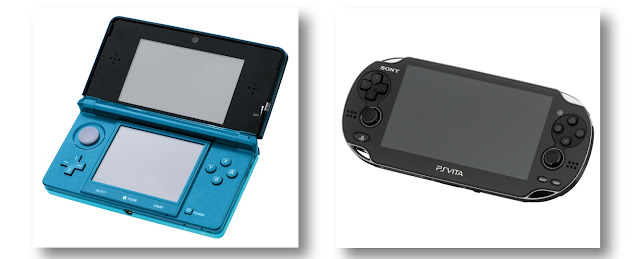
2011 saw the launch of two rival handheld gaming platforms that were evolutions of previous devices. The Nintendo 3DS had a dual display capable of displaying glasses-free 3D on an otherwise modest hardware platform, the Sony PlayStation Vita was a more powerful device but also a more traditional gaming console. Both products competed directly against each other, but it was the Nintendo that won out although the Sony did gain a dedicated fanbase.

Nintendo 3DS and Sony PlayStation Vita


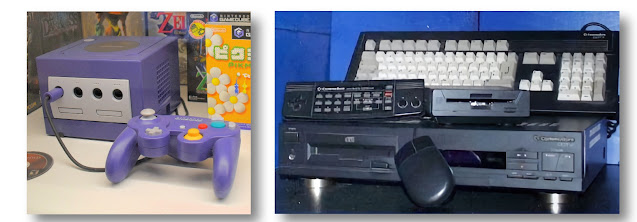
A decade earlier, in 2001, the Nintendo GameCube was launched against the Sony PlayStation 2 and the original Microsoft Xbox. In this fight, the GameCube came in third - in quite a bruising result for Nintendo.

Skipping back another decade to 1991 we see the Commodore CDTV, a repackaged Amiga that was meant to compete against the Sega Mega Drive and Nintendo SNES. It was a failure, and helped to accelerate Commodore to its demise a few years later.

Nintendo GameCube and Commodore CDTV

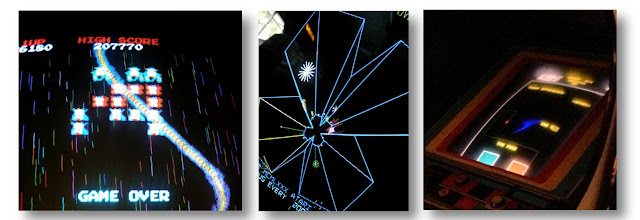
In the early eighties, the best place for video games was the local arcade and 1981 was part of the golden era of arcade machines. We've covered quite a few from this year, but Namco's Galaga and Atari's Tempest were both notable and were very different types of shoot-em-up. And if you fancied something different from endless slaughter, there was Taito's Qix which was more of a puzzle game where the player had to fill the screen with boxes while being chased by a mysterious electric entity.

Galaga, Tempest and Qix

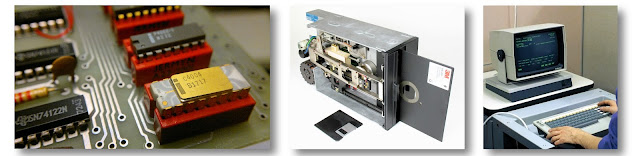
None of this would be possible without the microprocessor, and the first commercially-available device was the Intel 4004 which was launched in 1971. Originally designed for a calculator, the 4004 could be used for a variety of other purposes. A successful line of products followed for Intel, notably the x86 series of processors used in most PCs today.

The same year saw the release of the world's first floppy disks. Originally a huge 8 inches across (and very floppy), these inexpensive and transportable storage media and their 5.25 and 3.5 inch descendants were the standard way of transferring files into the 1990s and beyond.

A decade later, the Intel 8085 and a pair of 5.25" floppies could be found in the ergonomically designed Nokia MikroMikko. Nokia Data had a series of mergers and acquisitions, first with Siemens and then ICL until finally vanishing into Fujitsu.

Intel 4004, 8" floppy disk (with 3.5" for comparison), Nokia MikroMikko

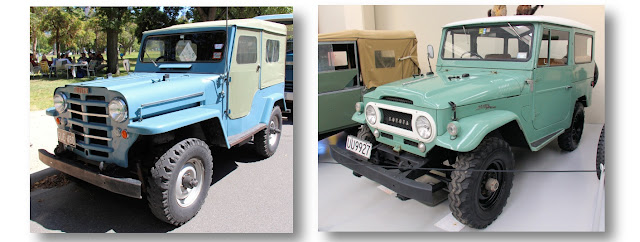
Nokia have made many things over their long history, including car tyres. Today you might find Nokian winter tyres on a Nissan Patrol or Toyota Land Cruiser - both these rugged and practical 4X4s were originally launched in 1951 and were heavily inspired by the wartime-era Willys Jeep.

Nissan Patrol (circa 1958) and Toyota Land Cruiser (circa 1966)


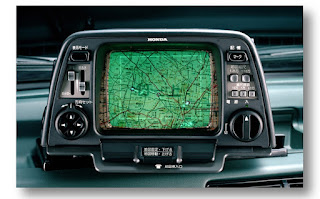
If exploring in your Japanese offroader with your Finnish tyres, you probably want a good system to tell you where you actually were in the world. Today you'd use a GPS system, but that wasn't an option back in 1981 when Honda announced the world's first in-car navigation system, the Electro Gyro-Cator. Instead of using satellites, it used inertial navigation and a set of transparent maps fitted over a screen. It was bulky, expensive and of limited use, but eventually the first in-car GPS system was launched in 1990 by Mazda.

Honda Electro Gyro-Cator

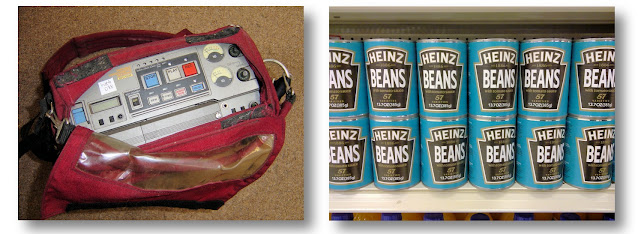
Stretching things out a bit more… if you found yourself off-roading in your big Japanese 4X4 with Finnish tyres in the 1970s or 1980s and you wanted to make a high-quality video recording of your journeys, the choice of professionals was a Sony U-matic recording system which was launched in 1971. Capable of capturing broadcast-quality images, the U-matic was the choice of professionals. Smaller than a traditional film camera, most units were still quite bulky and required a crew of two or three - one for the camera, one for the recorder unit and perhaps one for the microphone boom. Perhaps on your exploration into the wilderness you might want to pack some supplies, and there's a good chance that these might include Heinz Baked Beans, a staple of tinned food since 1901. Luckily the Japanese make some of the best can openers in the world too..

Sony U-matic in a carry bag and Heinz Baked Beans

Image credits:
Nintendo 3DS: Evan-Amos via Wikimedia Commons - CC0
PlayStation Vita: Evan-Amos via Wikimedia Commons - CC0
Nintedo GameCube: BugWarp via Wikimedia Commons - CC BY-SA 4.0
Commodore CDTV: Patric Klöter via Wikimedia Commons - CC BY-SA 3.0
Tempest: Russell Davies via Flickr - CC BY-NC 2.0
Galaga: David via Flickr - CC BY-NC-ND 2.0
Qix: Joho345 via Wikimedia Commons - CC BY-SA 3.0
Intel 4004: Simon Claessen via Flickr - CC BY-SA 2.0
8" floppy disk: Michael Holley via Wikimedia Commons - CC0
Nokia Data MikroMikko: Nokia
Nissan Patrol (1958): Sicnag via Flickr - CC BY 2.0
Toyota Land Cruiser (1966): Sicnag via Flickr - CC BY 2.0
Electro Gyrocator: Honda
Sony U-matic: Joybot via Flickr - CC BY-SA 2.0
Heinz Baked Beans: Ian Kennedy via Flickr - CC BY-NC 2.0


Monday, 28 December 2020

2020: things that didn’t quite make the cut

This year we’ve covered gadgets and inventions from the 1800s and up. But there are plenty of other things that had anniversaries this year that we didn’t mention.

One of the most important inventions debuted in 1810 – the tin can. A key product of the industrial revolution, the tin can answered many of the millennia-old questions about how to preserve foodstuffs. More reliable and palatable than salting, drying, pickling and a variety of other methods this humble tin can meant food security for growing populations in the 19th, 20th and 21st centuries.

Also hailing from the nineteenth century was celluloid, a versatile class of materials that were pioneered in billiard balls in 1870, and then found their way into many other products from toys to films. However, celluloid’s habit of bursting into flames means that it is rarely used as a material today.

Canned food in a store in Hong Kong, Easter brooch with celluloid flowers


Somewhat related to celluloid is cellophane, a lightweight and flexible material that lent its properties to Scotch Tape, introduced in 1930. Also from 1930 – and perhaps a little bit more edible – is the Hostess Twinkie cake bar. Allegedly, Twinkies last forever – but eat a decade-old box at your own risk.

Vintage scotch tape container, Twinkie cake bars

Fast forward to 1960 and the white heat of technology forges something even more high-tech than sticky tape and cake bars, with the laser. Don’t ask me to explain how these things work, they just do. Pew pew.

Visible lasers being demonstrated


People who remember the home computers of the 1980s probably remember the Commodore VIC-20 – but it had an immediate predecessor in the shape of the VIC-1001 which was sold successfully in Japan only. The main difference between the two is that the VIC-1001 supports Japanese Katakana characters.

Commodore VIC-1001


By 1990 of course things were really getting more advanced. The Sega Game Gear was an 8-bit handheld console that carved a significant market for itself. Another 8-bit games machine, the Commodore 64 Games System (or simply the C64GS) was a more traditional console based closely on the legendary Commodore 64 home computer. The C64GS held great promise with the potential of a huge games library, but it failed to deliver in a spectacular way.

Sega Game Gear, Commodore 64 Games System

In the same year, the Macintosh Classic breathed a bit more life into a familiar format at a sub-$1000 price point, but the 68000 processor was getting a bit long in the tooth by then. More powerful, but three times the cost, was the 68030-based Macintosh IIsi which was much more forward-looking.

Apple Macintosh Classic, Macintosh IIsi

Handheld gadgets continued to develop, and in 2000 the Sharp J-SH04 was launched in Japan which was the world’s first recognisable camera phone, with a rear-facing 0.11 megapixel camera. It wasn’t great, but it set a pattern that other early camera phones improved on.  

Sharp J-SH04


That’s it for 2020, a difficult year for many people. Let’s hope that 2021 will be better. A big shout out to all those key workers, healthcare professionals and everybody trying to be socially responsible (or even just managing to keep themselves sane) this year. 

Image credits:
Canned food in a store in Hong Kong: Bairgae Daishou 33826 via Wikimedia Commons - CC BY-SA 4.0
Easter brooch with celluloid flowers: Pinke via Flickr – CC BY-NC 2.0
Vintage scotch tape container: Improbcat via Wikimedia Commons – CC BY-SA 3.0
Twinkie cake bars: Photog Bill via Flickr - CC BY-NC-ND 2.0
Visible lasers being demonstrated: US Navy via Wikimedia Commons – Public domain
Commodore VIC-1001: Thomas Conté via Flickr - CC BY-SA 2.0
Sega Game Gear: James Case via Flickr - CC BY 2.0
Commodore 64 Games System: Thomas Conté via Wikimedia Commons - CC BY-SA 2.0
Macintosh Classic: Christian Brockmann via Wikimedia Commons – CC0
Macintosh IIsi: Benoît Prieur via Wikimedia Commons - CC BY-SA 4.0
Sharp J-SH04: Morio via Wikimedia Commons - CC BY-SA 3.0


Sunday, 15 November 2020

Super Nintendo Entertainment System (1990)

 Introduced November 1990 (Japan)

The best-selling 16-bit gaming console, the Super Nintendo Entertainment System (or just “SNES”) ruled the roost in the early 1990s, despite an epic battle with the Sega Mega Drive. Relatively late to the market, one of the key reasons for the success of the SNES was better games and good marketing.

Nintendo SNES (PAL Version)

Models varied throughout the world with different cases between North America, Japan and Europe with imcompatible cartridge slots and region locking in both hardware and software. In Japan the console was called the “Super Famicom”. At its heart was an unusual 16-bit development of the venerable 6502 processor called the Ricoh 5A22 – the previous generation Nintendo Entertainment System used another 6502 derivative, this time the Ricoh 2A03.

A wide range of colour graphics modes, an impressive audio subsystem called S-SMP (made by Sony) and ergonomically designed controllers made the SNES a capable hardware platform. But with games consoles, that’s just one of the ingredients you need for success.

What the SNES did have was games... lots of games. Super Mario, Mario Kart, Donkey Kong, Final Fantasy, Street Fighter, Mortal Kombat, SimCity and many more games were available. Many games were only available on Nintendo platforms, some (such as Mortal Kombat) were available of several. Nintendo did insist of elements of graphic violence being removed from games, which made them more family-friendly but ultimately probably lost them sales.

Depending on market, the SNES was around for about a decade and sold an astonishing 49 million units compared to the Mega Drive’s 32 million or so. A few revisions were made to the hardware, along with quite a lot of hardware expansions that had a limited audience, but ultimately the success of the SNES continued well into the 32-bit console era.

There’s a healthy retro gaming community around the SNES – used units are inexpensive, although game cartridges – especially rare ones – can be worth much more that the systems themselves. In 2017, Nintendo released the Super NES Classic Edition – a modern take on the classic console. There are also emulators and other reimagined versions out there – even after 30 years, the SNES still has the power to captivate gamers.

Image credit: JCD1981NL via Wikimedia Commons - CC BY 3.0

Sunday, 7 June 2020

IBM PS/1 (1990)

IBM PS/1 Model 2011
Introduced June 1990

By 1990 the PC-compatible marketplace had changed a lot since the launch of the original IBM PC (model 5150) in 1981. No longer just the choice of businesses, PCs had largely replaced an eclectic range of incompatible home microcomputers that had dominated the earlier 1980s. It was increasingly common to see PCs in the home, but they weren’t generally IBM PCs despite IBM inventing the platform.

IBM had tried to break into the home computing market in 1984 with the IBM PCjr, a short-lived crippled version of the PC that was a sales catastrophe. Apparently unperturbed by this, in 1990 IBM tried to break into the same market again… and they repeated many of the same mistakes they had done years earlier.

Worse still, IBM’s attempt to redefine the business PC market with the IBM PS/2 launched a few years earlier was floundering. Instead of moving the market from DOS and the old ISA hardware architecture to OS/2 and Micro Channel Architecture (MCA) it seemed that IBM just split the market between themselves and competitors such as Compaq who were improving the old platforms instead.

In 1990 IBM tried a shift in direction with the new IBM PS/1. Rather more based on traditional PC architecture than the PS/2, it was designed for home users who wanted to be able to unpack something from the box and get working in minutes Models such as the 2011 made this really easy, and when assembled they booted into a friendly screen allowing easy access to DOS, Microsoft Works on online services if they had been included.

IBM PS/1 Model 2133
A Mac-like simplicity to the hardware had some drawbacks – it wasn’t really expandable and the non-standard power arrangement where the computer was powered by the monitor (like the Amstrad PC1512) meant that you were stuck with using the IBM PS/1 monitor for ever.

The hardware was excellent though, and it wasn’t stupidly expensive (competing with Compaq on the likes of price), but consumers were not that interested. It didn’t help that IBM had to create a completely new sales channel for the things as traditional IBM dealers didn’t sell to consumers, but in the US large-deal with Sears who bundled access to Prodigy with the computers. On early models DOS was included in ROM, which made the machines very quick to boot up.

Consumers were cool about the PS/1 though, preferring other brands where they were available. IBM was still seen as a business PC, and the incompatibilities of the PS/2 range rubbed off on the PS/1 even though it was a different hardware platform. IBM stuck with the range though, making the machines more expandable and more standard in terms of hardware and software.

The range lasted until 1994 when IBM replaced the PS/1 range with the architecturally similar but more appealing IBM Aptiva range which continued until IBM’s exit from the home PC market in 2001. Today the PS/1 is an uncommon beast but it commands decent prices of about £500 to £700 or depending on model.

Image credits:
Kungfoocow369 via Wikimedia Commons – Public Domain
Science Museum, London – CC BY-NC-SA 4.0


Wednesday, 3 June 2020

Digital VT05 and VT420 (1970 and 1990)


The video terminal is the unsung hero of the computing world. Often toiling aware in warehouse, factories, colleges, shops and other places out of the public eye, the video terminal was a dependable workhorse for decades… well into the era of the PC.

Arguably the king of the terminal market was Digital Equipment Corporation (“DEC” or just “Digital”) who made terminals that were attached to minicomputers or mainframes, where they could run a wide variety of centralised applications that typically ran on Unix or VMS boxes.

They comprised of not much more than a display, keyboard and serial interface – and although they were not always cheap to buy, they were certainly cheap to run with no moving parts and complete immunity to computer viruses and other malfeasance. You could plug one in and forget about it for years, and it would keep doing its job.

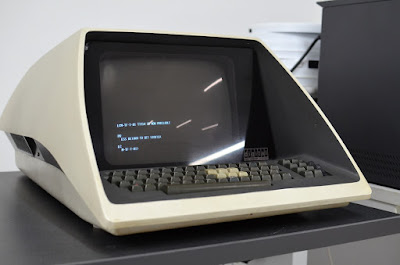
DEC VT05
DEC VT05
The DEC VT05 was introduced in 1970 and was Digital’s first standalone raster video terminal. Sure, I could tell you that it was a bit of an upgrade from the glass teletype concept with a bit of cursor control thrown in but probably the thing about the VT05 that most people will notice is how it looks. Digital’s radical space-age design made it look like the terminal was leaping out of the work surface. Inside the system boards were slanted behind the CRT rather than subsequent models which were more conventional inside. It looked fantastic, but the downside was that the VT05 was 30 inches (76 centimetres) deep which meant that you’d likely have to re-engineer your working environment to put one in. At 55 pounds (25 kilograms) it was hardly a lightweight device, so you wouldn’t want to move it anyway.

It could only display uppercase characters, but the keyboard could enter both upper and lowercase. Quite how you were meant to tell what you were typing is a mystery. Maximum data transfer rate was 2400 baud. The VT05 had a video input so you could display other things on the monitor, and mix them together with the text. The VT05 was around for five years until the much more capable – and conventional – VT52 was launched.

DEC VT420
DEC VT420
Fast forward twenty years and the direct descendant of the VT05 – the VT420 – is launched. Don’t expect two decade of development to count for all that much though, the VT420 was still conceptually the same thing. Unlike the VT05, the VT420 was a practical design with a separate keyboard and a monitor on a tilt-and-swivel stand that was supplied as standard (unlike previous versions). It weighed just 8kg so wasn’t a problem to move about a bit, and the ANSI character set that it supported allowed full cursor addressability and enough predefined graphics to make a nice user interface.

The VT420 also supported dual sessions, typically by using the two serial ports on the back. Not only could you interact with two utterly different systems, but you could also copy-and-paste between them. That might not seem like a big deal now, but back in 1990 most people still couldn’t paste data between applications on their PCs so it was kind of a big deal.

The data transfer rate was a speedy 38,400 baud using the compact phone-like MMJ sockets, the screen had a maximum capacity of 132 x 48 lines of text and the latest revision of DEC’s legendary keyboard – the LK401 – was almost perfect in every way except for the annoying lack of an Escape key.

Where the VT05 marked a point near the beginning of DEC’s journey, the VT420 marked a point near the end. The days of centralised minicomputers were starting to fade and throughout the 1990s PCs and Macs became more capable professional computing environments. The VT420 was a success but it lasted just three years before being replaced by the VT520 which was almost identical. DEC sold the entire terminal division in 1995 and they themselves were taken over by Compaq in 1998, who were then taken over by HP in 2002.

The VT range soldiered on with Boundless Technologies until 2003, and other manufacturers either closed down or shuttered production in the following years, including Wyse and Qume until there were none left.

Even though the manufacturing of terminals dried up, the computer systems that relied on them still exist. VT terminals are still in use around the world, but newer installations will typically rely on a PC with some terminal emulation software – a more complex and less reliable solution.

Today a DEC VT420 in good condition second-hand can cost a couple of hundred pounds, and maybe budget a thousand or so if you want to acquire a VT05. Of course terminal emulators can be had for less, a client such as PuTTY is free or Reflection is a more commercial offering.

Image credits:
Matthew Ratzloff via Flickr – CC BY-NC-ND 2.0
Adamantios via Wikimedia Commons – CC BY-SA 3.0


Tuesday, 17 March 2020

Squarial (1990)

A Squarial on display
Available March 1990

Direct-to-customer satellite television started in the late 1970s, but back in the early days it required a big and expensive dish to receive the broadcasts which had the effect of turning your back garden into something that looked like Jodrell Bank.

Although technology improved during the 1980s, by the end of the decade a typical satellite dish for Sky in the UK could still measure 90 centimetres across. Typically painted white, the dishes were regarded as an eyesore and when there were lots of them in an area – for example with blocks of flats and terraced houses – it made the place look like a KGB listening post.

Although Sky was popular in the UK, it gained a reputation for being rather lowbrow. A mix of imported US TV series and cheaply-made shows had a certain appeal, but neighbours might judge you harshly if you attached a massive dish to the side of your house to watch American wrestling.

It became obvious in the 1980s that the market could do with some competition, and through a complex mix of government legislation and business deals the idea of creating a company knows British Satellite Broadcasting (BSB) was born.

After some delays, BSB eventually started broadcasting in March 1990. It attempted to offer a more highbrow mix of shows including original content, high-quality imports and repeats of popular BBC shows... not to mention a bit of science fiction slash soap opera.

Low-level class warfare is a thing in the UK, and indeed the BBC TV show “Keeping Up Appearances” first broadcast in 1990 satirises just that. And for many middle-class people, the idea of sticking up a huge Sky satellite dish seemed frightful. But how could you differentiate that you were a middle-class BSB customer? BSB thought it had a secret weapon… the Squarial.

A Squarial in its natural habitat

The Squarial looked quite unlike other satellite receivers. Just 38 centimetres across, the Squarial was completely flat and inside was a phased array antenna made up of a large number of tiny individual antennae working together. This different technological approach was possible because BSB’s twin Marcopolo satellites had a higher power output than the Astra 1A satellite used by Sky.

It became something of a design icon, and created a significant buzz around BSB’s launch. Squarials started to appear on hundreds of thousands of homes. It looked like a success. But it wasn’t.

The problem that both Sky and BSB were losing huge amounts of money, a staggering $1.5 billion dollars between them (equivalent to about £2.5 billion today). Subscriber numbers were nowhere near the figures that either company needed to be sustainable. So in November 1990 Sky and BSB dropped a bombshell – these two bitter rivals would merge to become British Sky Broadcasting (BskyB).

Although on paper it was a 50/50 merger, in reality Sky was the dominant partner. And although costs could be saved by rationalising the TV channels, in the end it was inevitable that BSkyB would want only one broadcasting system – and that meant using the Astra satellite and not Marcopolo.

By 1992 BSkyB shuttered the service on the Marcopolo satellites, leaving both the Squarial and attached satellite set top boxes obsolete as they were incompatible with the Astra system. Essentially, for all but the most die-hard tinkerers the Squarial and all the rather expensive equipment that came with it ended up as junk. For owners it was like being on the wrong side of the VHS-Betamax war.

But the Squarials lingered – because of the fact that they were mounted in difficult-to-access places it meant that you’d have to pay somebody to take it down. So they lingered and lingered, a testament to making the wrong technological choice and a reminder of high-profile failure. Even today it is still possible to find a forgotten Squarial on the side of a house. For a few tens of pounds you could even acquire one yourself, and see if it really is “smart to be square”.

Image credits: Alex Liivet via Flickr
CC BY 2.0
pauldriscoll via Flickr
CC BY-NC-ND 2.0 


Saturday, 28 December 2019

2019: things that didn’t quite make the cut

This year we’ve covered products debuting in 1959, 1969, 1979, 1989, 1999, 2004, 2009 and 2014. Here are a few of the things we missed.

It being Christmas and all a good place to start would be the Honeywell Kitchen Computer from 1969. Appearing in the Neiman Marcus Christmas Catalog of the same year, the so-called Kitchen Computer actually a Honeywell 316 minicomputer in a desktop case which was designed for laboratory environments, however the imaginative folks at Neiman Marcus thought the pedestal would make a great chopping board while the wife of the household used it to retrieve recipes. A great idea, but the Honeywell 316 was totally unsuited to that role and total sales of the Kitchen Computer were approximately nil, but the myth still persists even to this day.

Although a kitchen is a difficult and unwelcoming environment for a computer, GRiD Systems Corporation made computers that travelled into space. In 1989 they launched the GRiDPAD, the world’s first tablet computer. While not as friendly as a modern tablet, this MS-DOS machine sold relatively high numbers with a price ticket of about $3000 for one with software.


Honeywell 316 aka "Kitchen Computer" (1969) and GRiDPAD (1989)

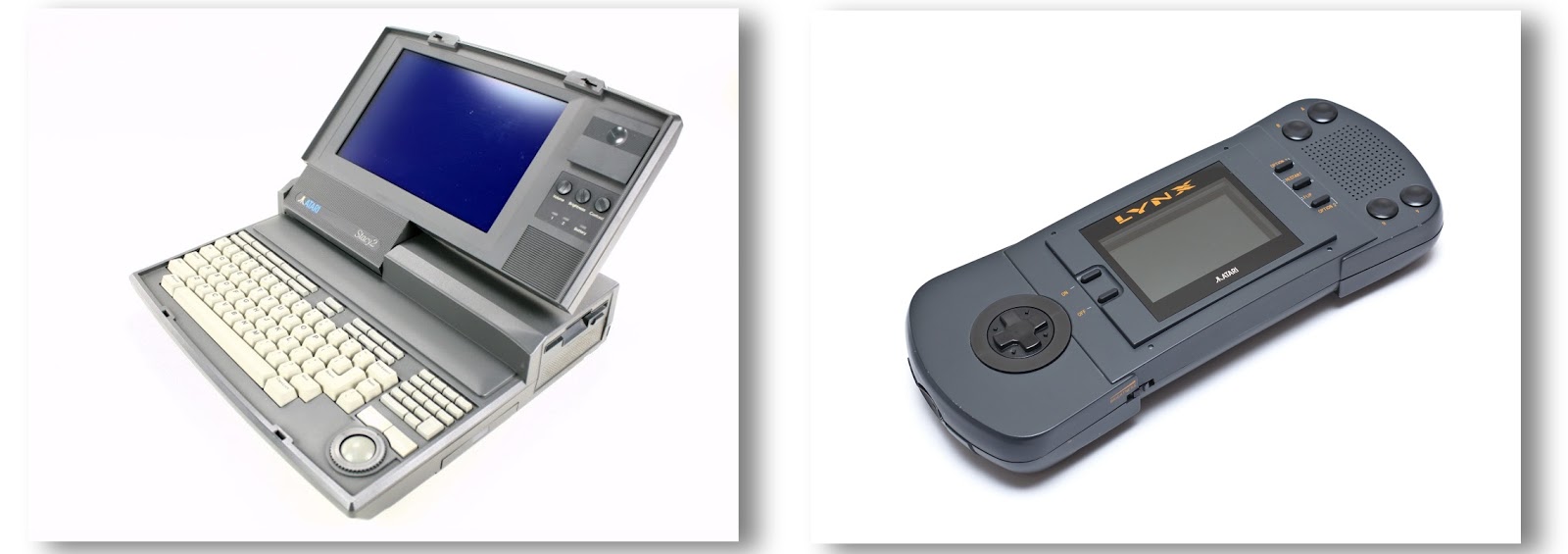
Atari too were experimenting with portable computing, and in 1989 they launched the Portfolio (that we already covered) plus the Atari Stacy and Atari Lynx. The Stacy (styled STacy by Atari) was a portable version of the Atari ST which had proved a hit in the mid-80s but was now fading. However, the Stacy found a successful niche with musicians who liked the portability and the excellent MIDI support, even though Atari gave up on making it battery powered quite late into development and ended up gluing the battery compartment shut. At the other end of the scale was the Atari Lynx was a handheld gaming platform that was advanced for its day but struggled against the Nintendo Gameboy... however even today the Lynx has its fans and now and again new games appear for it.

Atari Stacy (1989) and Atari Lynx (1989)
Like Atari, Zenith Data Systems had been a pioneer of early microcomputers and they too were keen to jump on board the portable computer bandwagon. The Zenith MinisPORT (launched in 1989) was one of the smallest DOS-compatible computers made to that date, and it featured a highly unusual 2” floppy disk drive in order to keep the size down.

Zenith MiniSPORT (1989)
Sega was another stalwart of the gaming industry, in 1989 they launched the Sega Mega Drive (also known as the Genesis) that proved to be a massive hit in Europe and North and South America – although officially replaced by the Sega Saturn in 1995 the popularity of the Mega Drive continued. 30 years later and Sega revisited the platform with the Sega Mega Drive Mini. Skip another generation from the Saturn and you get the 1999 Sega Dreamcast. The Dreamcast was an advanced machine with excellent 3D support, but it couldn’t compete against Sony’s Playstation 2 and it was Sega’s last mainstream games console.

Saga Mega Drive aka Genesis (1989) and Dreamcast (1989)

Back to 1989 again and we find a computing oddity in the SAM Coupé – an unusual machine that was compatible with the Sinclair ZX Spectrum with various enhancements such as a proper keyboard, floppy disk and more memory. It was a niche success against 16 and 32-bit rivals and it still has a dedicated following today. Don’t confuse the SAM Coupé with the Cozy Coupe though, this little plastic car for children was launched in 1979 and it would technically be one of the world’s best-selling cars if it was actually a real car.
--
SAM Coupé (1989) and Cozy Coupe (1979)


Looping round one last time to 1989, and Motorola launched their iconic MicroTAC series of phones. This flip-phone design was much more compact than the DynaTAC that preceded it, and many versions of the MicroTAC were made for all the disparate analogue and digital networks of the early 1990s. The design evolved over the years, and versions of the MicroTAC stayed in production until 1996. One of the MicroTAC’s spiritual successors might be the tiny Ericsson T28, the world’s smallest mobile phone when it was launched in 1999 weighing just 83 grams. Ultimately both the MicroTAC and T28 started a trend for mobile phones to be smaller and lighter, which is something we seem to have lost along the way..

Motorola MicroTAC (1989) and Ericsson T28 (1999)


That’s it for 2019. Next year we look to cover diverse topics such as the Acorn Atom, Epson MX-80, Squarial and Pac-Man plus many other things. See you on the other side!

Image credits

Honeywell 316: Scott Beale via Flickr
GRiDPAD: Association WDA via Flickr
Atari Stacy: Perfect Circuit Audio via Wikimedia Commons
Atari Lynx: Pete Slater via Flickr
Zenith MiniSPORT: Kris Davies via Wikimedia Commons
Sega Mega Drive: Barité Videojuegos via Flickr
Sega Dreamcast: Evan-Amos via Wikimedia Commons
SAM Coupé: Simon Owen via Wikimedia Commons
Cozy Coupe: Nick via Flickr
Motorola MicroTAC: Redrum0486 via Wikimedia Commons
Ericsson T28: The Norwegian Telecom Museum via Wikimedia Commons

Sunday, 20 January 2019

TiVo (1999)

Introduced January 1999

It’s easy to forget that recording TV shows 20 years ago was a major hassle for most people. VHS recorders could typically record just three to five hours in a strictly linear fashion. If you wanted to record from cable or a satellite box then it was tricky, and in any case if the show was running late for any reason you would miss it at least part of it. You also couldn’t watch something that you had already recorded while you were recording something else.

TiVo Roamio DVR with characteristic remote controller

The introduction of TiVo in 1999 helped to change all that. Ditching the tape, the TiVo recorded on a hard disk which could initially store 35 hours of programming, but this quickly increased. You record and play back at the same time, pause live TV and the integrated Electronic Program Guide (EPG) made it much easier to find shows in listings and could help to prevent missed recordings. Some models integrated satellite or cable receivers too, an essential modern feature for many.

Twenty years on and time shifting and binge watching whole recorded series has become pretty commonplace, and although online services such as Netflix are eating into traditional broadcasting’s market share, TiVo’s fifth- and sixth-generation boxes now support those too, along with up to six tuners and 3 terabytes of storage. Would you want to try doing the same thing with a VHS VCR? Probably not...


Image credit: TiVo

Friday, 21 December 2018

2018: things that didn’t quite make the cut

We’ve covered a range of stuff this year, as far back as 1888 and through to 1928, 1938, 1948, 1958, 1968, 1978, 1988, 1998, 2003, 2008 and 2013 (phew!). But quite a few things also had anniversaries this year. Here are some that we didn’t get to cover.

If you like spicy food, then there’s a good chance that you own some Tabasco sauce. The tabasco peppers the sauce contains originally came from the Mexican state of the same name, but the Tabasco branded sauce you typically see comes from Louisiana where both it and the McIlhenny Company were created in 1868.

One thing that you could put a dash of Tabasco in would be a Cup Noodle. Introduced by Nissin into Japan in 1958, the Cup Noodle eventually spread throughout the world, inspiring other very similar brands such as Pot Noodle in the UK.


Tabasco Sauce (1868), Cup Noodle (1958), Pepsi Cola (1898)
If you were looking for a beverage to wash your spicy Cup Noodle down with, Pepsi-Cola was invented in 1898 or you could try some Vimto, invented in Manchester in 1908 and popular with members of temperance societies who didn’t drink alcohol. Vimto also because a hit in many Muslim countries for the same reason.

1958 saw a peculiarly American take on a Scandinavian favourite with the launch of Swedish Fish. A brightly-coloured remake of the salty liquorice original, Swedish Fish remain popular in the United States today, although they contain no actual fish. Similarly, Jelly Babies contain no actual babies, but are also squishy and brightly coloured. Bassetts launched their well-known take on Jelly Babies in 1918.


Vimto (1908), Swedish Fish (1958), Jelly Babies (1918)

Back in Sweden, 1978 saw the launch of perhaps the most recognisable SAAB automobile, the SAAB 900. Spending 15 years in product, the 900 was an understated yet rather desirable car that showed Swedish engineering at its finest… and most quirky. One thing that drivers of the SAAB 900 would find interrupting their otherwise enjoyable journey were traffic lights, first introduced in London in December 1868. This gas-powered traffic light was short-lived however, as it exploded the following month. It took another half century or so for the idea to gain popularity… but my goodness, it did.

More entertaining than traffic lights, the LP record was launched by Columbia Records in 1948. Starting a familiar pattern of trying to squeeze more entertainment into a physical format, technologies such as the LaserDisc, CDs, DVDs and Blu-rays really just followed the LP’s lead.

SAAB 900 (1978), Traffic Light (1868), LP Record (1948)
1918 saw the creation of the electronic flip-flop, a bistable circuit that can be used to save a 0 or a 1, and is therefore an important step into creating modern computing.  Three-quarters of a century later this led to the not exactly awe-inspiring Atari Jaguar and Amstrad Mega PC consoles, plus the Apple MessagePad PDA. But apparently there was a lot of other stuff along the way too.

Flip-Flop (1918) plus Atari Jaguar, Amstrad Mega PC, Apple MessagePad (1993)

In the online world, the process of connecting computers together to share information was given a boost by the invention of the modem in 1958, allowing computers to communicate over plain old telephone lines. 30 years later this allowed many Internet-connected computer users to talk to each other using Internet Relay Chat, and 5 years after THAT - in 1993 -  these technologies had grown into the nascent World-Wide Web and the world’s first recognisable search engine was born… no, not Google but something called JumpStation.

Modem (not actually a 1958 model), Jumpstation (1993), Internet Relay Chat (1988)

What can we look forward to next year? We see the anniversaries of such diverse products as TiVO, the Intel 486, Sinclair ZX80, Lunar Lander and... err, the Toyota Crown S130. Not all breakthroughs are as obvious as you would think. In the meantime, enjoy a mince pie - first introduced into Europe in the 13th Century.

Image credits:
g4ll4is via Flickr
Rainer Zenz via Wikimedia Commons
Qirille via Wikimedia Commons
Wapster via Flickr
Swedennewyork via Flickr
Sam Greenhalgh via Flickr 
Huynh Phuc via Wikimedia Commons 
Raysonho via Wikimedia Commons
Sheila Scarborough via Flickr
Turbojet via Wikimedia Commons
Evan-Amos via Wikimdia Commons
Association WDA via Flickr
MKFI via Wikimedia Commons
Frederik Ramm: Recherchieren und Publizieren im World Wide Web
Darkbear via Wikimedia Commons