Thursday, 24 March 2022

Nokia 3510 (2002)

Introduced March 2002

It is sometimes said that there are only two things that would survive a nuclear war: cockroaches and old Nokia phones. The Nokia 3510 – launched in 2002 – has the potential to be something that a future cockroach civilisation would unearth and worship as some type of cockroach god.

Maybe in this future roach utopia the 3510 might find itself in an epic Godzilla vs Kong battle with the legendary Nokia 3310, but the 3510 takes the indestructible design of the 3310 including the funky changeable Xpress-on covers and adds polyphonic ringtones, bigger screen, GPRS and a WAP browser. Indeed, the 3510 was once of the very first popular consumer phones to offer GPRS.

Sober or funky, the Nokia 3510 had interchangeable covers


Like the 3310, the 3510 could survive a direct strike from a Tsar Bomba – but it couldn’t quite wrestle the roach god crown from the 3310. But a few months later the 3510i arrived, adding not only a colour screen but also support for Java games. The bugs raised temples in its honour.

Although the 3510 (and 3510i) are primitive by modern standards, they form part of the golden age of mobile phone design where every new handset looked different and new technologies were being introduced at a rapid rate, here with colour screens and Java but also including cameras, Bluetooth, media players, expandable memory and so much more.

XpressOn covers allowed a high degree of personalisation with the 3510i

If you fancy a retro Nokia like this then you’ll be pleased to know that they are as cheap as chips, buy enough of them and you could even make a Nokia Stonehenge for future cockroach archaeologists to puzzle over.

Image credits: Nokia


Wednesday, 23 March 2022

Kaypro II (1982)

Introduced March 1982

A few years after the introduction of the first generation of practical microcomputers, manufacturers started to look at the possibility of having a computer that you could take anywhere rather than have tied to a desk. Perhaps the best known of this first generation of “luggable” microcomputers was the Osborne 1, launched in 1981.

The Osborne had plenty of limitations, not least the tiny screen. The market was ready for something better, and something better certainly turned up with the Kaypro II. It was designed by a company called (at the time) Non-Linear Systems (or just “NLS”), who up until this point had made lab equipment. NLS knew how to make reliable, rugged and portable electronics and they turned this expertise to a microcomputer.

A Kaypro II with several other vintage portables

Running the de-facto standard CP/M operating system and running on a 2.5MHz Z80 CPU with 64Kb of RAM and dual floppy disks, the Kaypro II had highly competitive specs for the era. Built into the high-quality painted aluminium case was a pin sharp 9 inch display which you could comfortably use all the time. The keyboard was also a high-quality design and it clipped firmly into place on the case making a practical if somewhat hefty 13 kilogram computer.

It wasn’t just the hardware that made the computer competitive. The Kaypro II was bundled with an office suite from Perfect Software that included a wordprocessor, spreadsheet and database, plus a version of BASIC that could be compiled into CP/M .com programs. Eventually the bundled programs included the class-leading WordStar wordprocessor and SuperCalc spreadsheet. The bundled software theoretically cost many hundreds of dollars, making the Kaypro II seem more of a bargain. If what you wanted wasn't in the box, then there was a wide range of business and home software available, including the legendary Zork.


Please give this Kaypro II a home

This was a high-quality, reliable, well-designed and inexpensive product and it became quite a success. If you took one home from the store there really wasn’t much you needed to do except plug a few cables in. Everything else was in the box, making this an extremely consumer friendly-product.

It ended up as a popular tool with writers. Arthur C Clarke had one, as did Jerry Pournelle. Although it was always a bit of a niche system, the Kaypro II was enough of a success to make NLS a major player in the early 1980s market.

Curiously, there was never a Kaypro I as such. Aping the rival Apple II, NLS decided on making their first commercial machine another “II”. In 1983 it was followed by the improved Kaypro IV and Kaypro 10 (with a 10Mb hard disk), then in 1984 followed the Kaypro 4 and Kaypro 2X which were confusingly named, and if you thought that was confusing another Kaypro 2 followed in 1985 and the Kaypro 1 in 1986 (because why the heck not call it the “1”). All those Kaypro machines ran CP/M, it took until 1985 for Kaypro (as it changed its name to) to come up with a PC-compatible system with the Kaypro PC and the Kaypro 286i, which was the world’s first AT-compatible system. Kaypro also adapted their luggable boxes with the MS-DOS capable Kaypro 4 Plus 88 and Kaypro 16. Kaypro even managed an early MS-DOS laptop with the slightly peculiar Kaypro 2000 and the qurkly and deeply unreliable CP/M Kaypro Robie. Somewhere along the line NLS changed its name to “Kaypro” as well.

Kaypro went from boom to bust quite quickly. The II was launched after the IBM PC but before it became really popular. It took four years for Kaypro to come up with their own PC, by which time the rapidly-evolving market had moved on. Despite soldiering on for a few years, Kaypro went bankrupt in 1992.

As with almost all microcomputer companies of the era, the success of Kaypro was relatively short-lived. However, they were the first company to come up with a practical and affordable portable computer, furthermore one that required very little work to get it fully operational, with a high-quality build and smart looks. The Kaypro II undoubtedly influence other computer designs of the same and next generation.

Today the Kaypro CP/M portables are somewhat collectable, although many have become separated from the floppy disks that held the software. Most available systems are in the US but some can be found in Europe, but expect to pay several hundred pounds

Image credits:
Diaper via Flickr - CC BY 2.0
Daniel Boulet via Flickr - CC BY-NC 2.0


Sunday, 13 March 2022

LINC (1962)

First delivered in March 1962

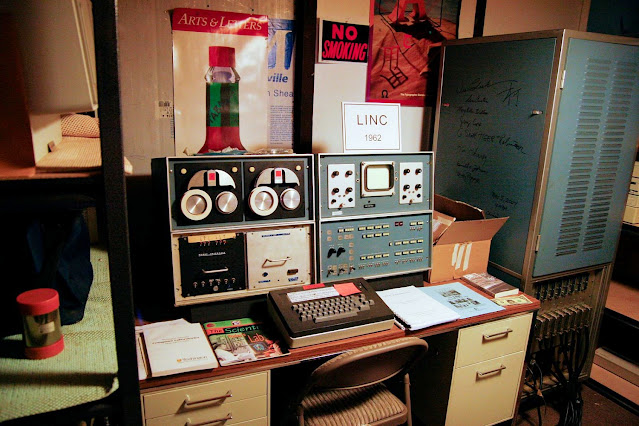
The LINC – short for Laboratory INstrument Computer - was one of the world's very first minicomputers, helping to break the computer out of the corporate machine room and making it available to individual departments, labs and (at a stretch) homes.

Designed at MIT for academic work, most LINC machines were built by Digital Equipment Corporation, who were based in Massachusetts as is MIT. By 1962, DEC had already launched the PDP-1 (another candidate for the world’s first minicomputer) but the LINC was considerably cheaper and more compact.

Based on a 12-bit architecture, one innovation with the LINC was the tape drive (the LINCtape) which could store up to 400Kb and allowed a slow but reliable form of random access storage (somewhat like a very slow disk drive). The LINCtape evolved into DECtape, a common feature on DEC’s PDP line.

Digibarn's LINC system


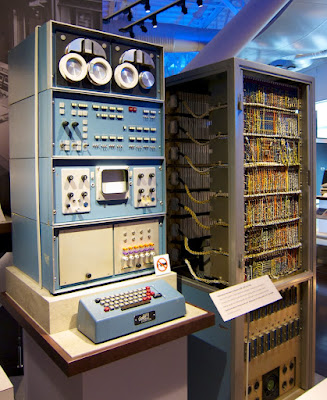
A small CRT could be used for output, and a rather clunky keyboard from Soroban Engineering (responsible for many computer keyboard of the same period) allowed input. Additional output could be made to a teletype, and the LINC could also be controlled by a set of rotary knobs which were essentially a precursor (pun intended) to the mouse.

The key application for the LINC was interfacing with lab equipment through the inbuilt A-to-D (analogue to digital) and D-to-A interfaces. This made the LINC a successful lab machine, although only 50 were built so it didn’t exactly change the world.

LINC exhibit at the Computer History Museum, California


Significantly though, the LINC may be the world’s first home computer. Programmer Mary Allen Wilkes had a LINC system installed in her home, something that would be unfeasible with the 730kg PDP-1. It would take another 15 years or so before home computers became something that you could just go to the local electronics store to buy..

The LINC architecture grew into the PDP-5, PDP-8, PDP-12 and DECmate well into the 1970s. In the end though, the 16-bit PDP-11 and 32-bit VAX architecture (which were unrelated) moved things forward from there.

Image credits:
Jonathan Assink via Flickr - CC BY-ND 2.0
Don DeBold via Flickr – CC BY 2.0


Tuesday, 22 February 2022

Intel 80286 (1982)

 
Launched February 1982

By 1982, Intel was on a roll. Their 8086 processor series (launched in 1978) was gaining widespread acceptance and in particular had found itself in the IBM PC launched the previous summer.

Four years is a very long time in the microprocessor market, and by 1982 things had moved on. While the 8086 was good enough for a single-user business computer, more sophisticated systems needed a more sophisticated CPU. Intel wanted to capitalise on the success of the 8086, but come up with a processor that could be use in more powerful multiuser systems while maintaining a good deal of compatibility with the older CPU.

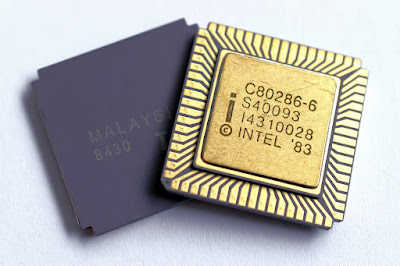
The resulting Intel 80286 processor was launched in February 1982, and it became commonly referred to as the “Intel 286” quite quickly. A 16-bit CPU clocked at 5 to 8 MHz at launch, the 286 could either run in “real mode” which was directly compatible with the 8086, or a “protected mode” which was more suitable for multitasking operating systems. Up to 16MB of RAM could be addressed, although few systems would come equipped with that much memory due to the price.

Intel 80286
Intel 80286

Although you could multitask with the 286, you could not run virtual “real mode” sessions. So it was impossible (for example) to run multiple DOS sessions on the computer. Switching between modes required either a reboot or some clever hardware and firmware trickery.

Some operating systems did use the full power of the 80286, including Microsoft’s long-forgotten version of UNIX called XENIX and a couple of other Unix-like OSes. These were niche markets, instead probably the best-known use of the 80286 was 1984’s IBM PC/AT which was a redesign of the original PC with the 286 dropped in, along with a new bus and various other improvements. Although the PC/AT still ran DOS and didn’t use the full features of the 286, it was much faster than the original PC which was frankly a bit of a tortoise.

Because IBM and other suppliers insisted on a second source for the 80286, Intel licenced the processor to other manufacturers. These included IBM, AMD, Harris, Siemens and Fujitsu. Harris pushed the speed of the processor up to 25MHz, twice as fast as the top-of-the-line Intel 80286 which ran at just 12.5MHz. For AMD, the second sourcing of the 286 gave them an entry into the Intel-compatible CPU market where they are still the only real competition to Intel today.

The 286 certainly moved things forward, but in terms of the PC it wasn’t the technological leap forward that it needed. In 1985, Intel launched the 80386 which could run multiple virtual 8086 real modes… this meant that a PC could run several DOS applications at once which was a key factor in the uptake of Windows rather than MS-DOS in the PC marketplace.

Although Intel officially dropped the 286 in 1991, Harris and AMD continued to develop it and provided some serious competition to Intel’s new 386 for quite a while. Today these 286 CPUs are still used in some embedded systems, and the Renesas CS80C286 is still available today for these applications.

Second source AMD 286 variant

The 80286 established that the PC architecture wasn’t a one-off design, and marked the beginning of a continual evolution of the platform which of course is still with us today. Because it couldn’t multitask DOS programs, its impact was more limited than the 80386 that followed. However, Windows supported the 286 until version 3.1 (launched in 1992). Many 286-based PCs soldiered on well into the 1990s, some even making it to the Internet age with applications such as Netscape Navigator – far outliving the usefulness of the previous generation.

Image credits:
Thomas Nguyen via Wikimedia Commons
- CC BY-SA 4.0
Pascal via Flickr – CC0


Sunday, 23 January 2022

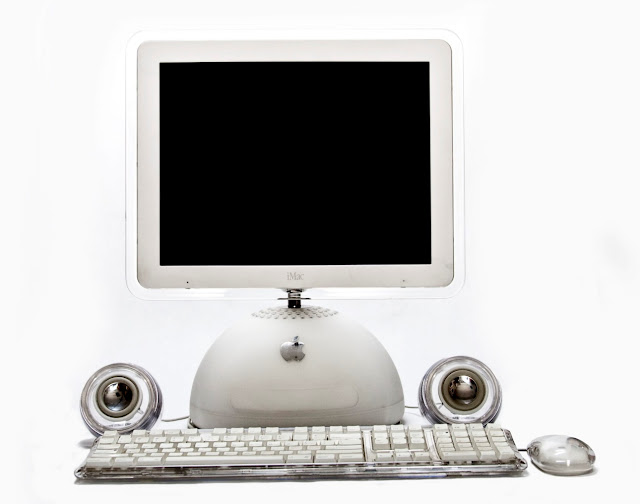
Apple iMac G4 (2002)

Launched January 2002

Apple is a company with more ups and downs than most. By 2002, Apple had already had success with the original Apple II in 1977, wobbled a bit with the Apple III in 1980 but then moved on to more success with the original Macintosh in 1984. Successes followed, but during the 1990s the company’s fortunes declined significantly and by 1997 it was a whisker away from bankruptcy. But in 1997 Steve Jobs returned to Apple and injected some new ideas, and aided by now legendary design Jony Ive the company came up with the iconic iMac G3 – launched in 1998 – which fundamentally changed Apple’s fortunes.

The iMac G3 is one of Apple’s best-loved designs. Beautifully designed around the shape of the cathode ray tube (CRT) contained inside in translucent candy-coloured cases, the G3 caused a monumental stir in the market. Here was a computer than both looked beautiful and just worked out of the box. Sure, the basic design idea had been around for more than 20 years (the ADM3A being a notable example)… but Apple did it better.

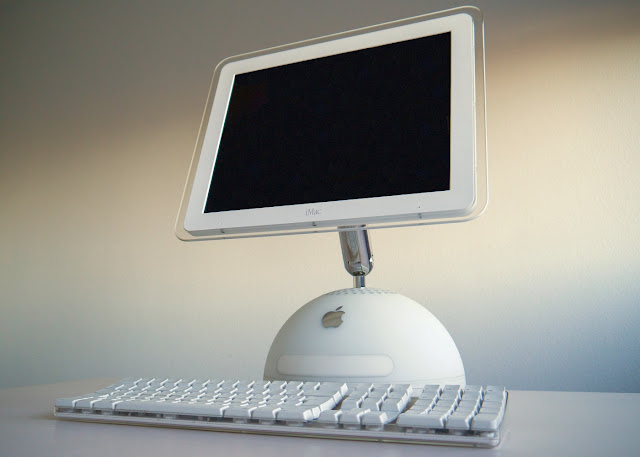
Apple iMac G4
Apple iMac G4

By 2002 though technology had changed. Just four years previously the CRT was the standard display for almost all desktop computers, but by the early 2000s there was a shift towards LCD panels which were rapidly dropping in price and increasing in capabilities. Although CRTs still had a bit more life in them, the obvious choice for a forward-looking company such as Apple was to go with LCDs for their next-generation iMac.

In design terms though, the LCD panel necessitated a completely different design from the CRT in the G3. It wouldn’t make any sense to replicate the G3’s design when most of the box would be empty space with an LCD, but the G3 had set an incredibly high bar in design terms. So where could Apple go next?

So the Apple design team – led by Jony Ive – came up with something completely different. Instead of tucking all the system components in close to the display, the Apple iMac G4 featured the LCD mounted in an adjustable arm with the actual computer tucked into a large dome at the base. The base contained everything, including an optical drive, and it gave the G4 a distinctive look in the manner of an oversized desk lamp.

Inside was a PowerPC processor running at between 700 MHz and 1.2 GHz. Maximum memory was 1 or 2GB depending on model, but a rather more modest 128 or 256MB was supplied in the box. Internal expansion was limited as this was a compact all-in-one unit like its predecessor, but peripherals could be added via USB or FireWire. A modem and wired Ethernet port were built in, a wireless network adapter was available as an option.

It was an elegant – if odd-looking solution – with everything you needed in the box which required minimal effort to get working. However, the LCD panels were still pricey compared to CRTs so a few months later the eMac was launched, the last CRT-based Mac which was a fair bit cheaper than the iMac and sold well to educational markets.


Alternatively you could have bought a PC in a beige or grey box

The G4 stayed in production for just two and a half years before being replaced by the rather more sober G5. Today collectors can pick up a G4 for less than the price of the G3 with typical prices for a working system being just £120 or so.

Image credits:
Maxime Bober via Flickr - CC BY 2.0
Carl Berkley via Flickr - CC BY-ND 2.0


Wednesday, 12 January 2022

Renault 5 (1972)

Introduced January 1972

The history of postwar European car design has several chapters. Immediately after the Second World War, motor manufacturers simply started with the designs they had in the 1930s and went from there. Although this had some successes such as the 2CV, the average motorist in the early 1950s had a choice of expensive and not terribly up-to-date vehicles to choose from.

By the late 1950s, smaller cars such as the Fiat 500 came to the market. Much cheaper than anything else about, they were still practical and useful and a great deal of what followed was inspired by the idea of cheap motoring. Renault in particular had found success with the 1961 Renault 4 which despite being rather basic and slow was popular for its interior space and its versatile cargo bay.

By the end of the decade technology and design had moved on. The bulk of demand was still for small cars, and it was becoming obvious that the idea of a hatchback offered maximum versatility, especially in a small car. Simca had strong sales for the compact 1100 during this period, but it was rather stuck in the 60s in terms of design. The market was ripe for a change.

Into this story came a designer named Michel Boué who worked for Renault. As a side project he had been working on a design for a compact and modern hatchback. Although it was never an official project, it eventually came to the attention of Renault’s management who were impressed and commissioned a prototype, with the car being green-lit for production as the Renault 5, with a formal launch in January 1972.

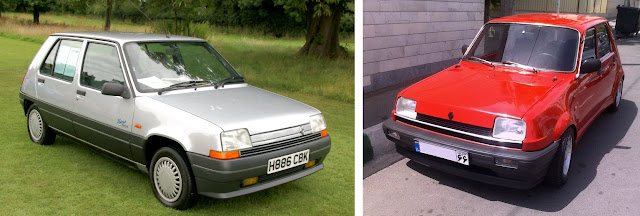
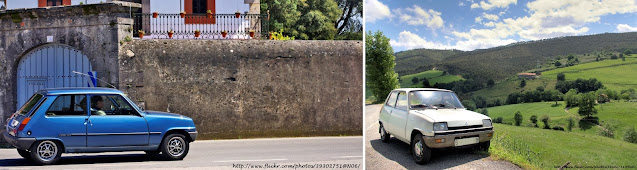
Renault 5
Renault 5


A front-engined, front-wheel drive car with bang-up-to-date styling, the 5 looked far more modern than rivals which were stuck in the sixties. The Renault 5 firmly looked forward to the 1970s. Styling features included rectangular headlights, large (and effective) plastic bumpers and a large hatch at the back with narrow lights on either side to maximise loading capacity.

The Renault 5 certainly had bags of style..


Over its lifetime the selection of engines ranged from a tiny 0.8 litre unit of a 1950s vintage to a rather spicy 1.4 litre turbo. Weighing only around 800kg, the Renault 5 didn’t need a whole lot of power to propel it. It loaned itself to hot hatches (such as the Alpine and Gordini variants) and even a mid-engined sports car with the epic Renault 5 Turbo. There were a few odd things about it, such as the wheelbase being different on either side of the car, but overall this was a very capable package.

Crucially, the 5 was ahead of most of the competition in terms of launch date. Even the contemporary Fiat 127 wasn’t available as a hatch at launch (it was a saloon), and rivals Volkswagen, GM Europe and Ford were years behind. Even the original hot hatch versions pipped the classic Golf GTI to the post by two months.

Renault 5 Turbo and US-Spec Le Car

Unusually for a small French car it was also sold in the United States by Renault’s partner AMC under the questionable name of the Renault Le Car. The 5 was sold widely around the world, and it was manufactured in diverse countries such as Venezuela, South Africa and Iran in addition to its home country of France.

A successful and iconic design, the 5 nonetheless has its share of tragedy. Michel Boué died of cancer before it came to market, robbing Renault of a potentially very talented designer – grimly echoing the death of Pio Manzù, who was the designer of the Fiat 127 and who also died before it came to market.

In 1984 a new version was launched. The completely new Supercinq updated the styling and technologies for the new decade. Whether you prefer the original or sequel is a matter of taste, but the Supercinq was also successful and stayed in production until 1996 when it was replaced with the first generation Renault Clio.

As for the original 5 – it had a strange afterlife in Iran as the Renault PK which was an odd mashup of Renault and Kia parts. Also a rather curious an electric version of the original 5 was sold in the US during the 1970s and 1980s called the “Lectric Leopard”. Renault themselves demonstrated an electric concept version of the 5 in 2021, although whether the Renault 5 badge will ever see production again is questionable.

Second-generation "Supercinq" and Iranian Renault PK

As for significance – before the Renault 5 only a small few cars had hatchbacks, and afterwards pretty much all small cars followed suit with the extra door on the back. This basic configuration stayed popular well into the 21st century when it started to be replaced with larger and more unwieldy crossovers.

Today, unmolested hot hatch versions of any Renault 5 model can cost you £30,000 or much more with racing spec versions coming in at up to £100,000. More sedate versions of the original 5 are pretty hard to find these days, and even basic second-gen cars can go for a few thousand pounds. It seems the 5 still has it fans, even decades after launch.

Image credits:
Mic via Wikimedia Commons - CC BY 2.0
Spanish Coches via Flickr - CC BY 2.0
Alexander Migl via Wikimedia Commons - CC BY-SA 4.0
Jonathan Kellenberg via Flickr - CC BY 2.0
Kamran Ba via Wikimedia Commons - CC BY-SA 4.0
Steve Knight via Flickr - CC BY 2.0


Tuesday, 28 December 2021

2021: things that didn’t quite make the cut

This year we mostly concentrated on the year ending in "1", covering gadgets and technology from 1941, 1951, 1961, 1971, 1981, 1991, 2001 and 2011. It turns out to be a decent last digit for computers, games consoles and cars in particular. But here are some of the things that were also notable that didn't get covered.

2011 saw the launch of two rival handheld gaming platforms that were evolutions of previous devices. The Nintendo 3DS had a dual display capable of displaying glasses-free 3D on an otherwise modest hardware platform, the Sony PlayStation Vita was a more powerful device but also a more traditional gaming console. Both products competed directly against each other, but it was the Nintendo that won out although the Sony did gain a dedicated fanbase.
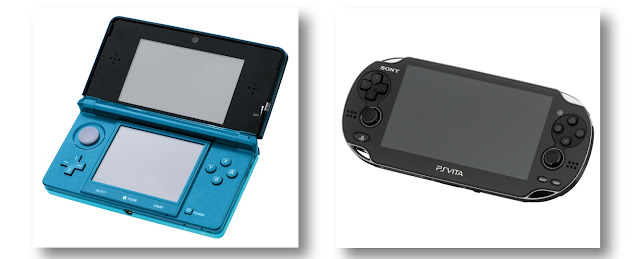
Nintendo 3DS and Sony PlayStation Vita


A decade earlier, in 2001, the Nintendo GameCube was launched against the Sony PlayStation 2 and the original Microsoft Xbox. In this fight, the GameCube came in third - in quite a bruising result for Nintendo.

Skipping back another decade to 1991 we see the Commodore CDTV, a repackaged Amiga that was meant to compete against the Sega Mega Drive and Nintendo SNES. It was a failure, and helped to accelerate Commodore to its demise a few years later.
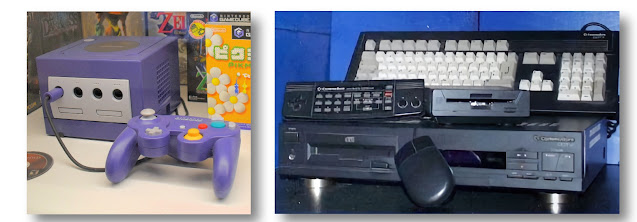
Nintendo GameCube and Commodore CDTV

In the early eighties, the best place for video games was the local arcade and 1981 was part of the golden era of arcade machines. We've covered quite a few from this year, but Namco's Galaga and Atari's Tempest were both notable and were very different types of shoot-em-up. And if you fancied something different from endless slaughter, there was Taito's Qix which was more of a puzzle game where the player had to fill the screen with boxes while being chased by a mysterious electric entity.
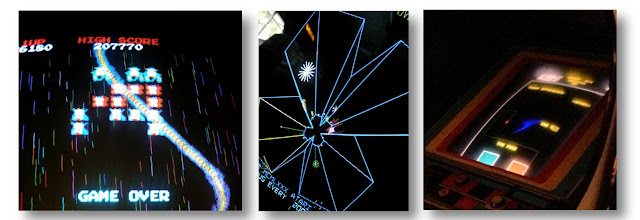
Galaga, Tempest and Qix

None of this would be possible without the microprocessor, and the first commercially-available device was the Intel 4004 which was launched in 1971. Originally designed for a calculator, the 4004 could be used for a variety of other purposes. A successful line of products followed for Intel, notably the x86 series of processors used in most PCs today.

The same year saw the release of the world's first floppy disks. Originally a huge 8 inches across (and very floppy), these inexpensive and transportable storage media and their 5.25 and 3.5 inch descendants were the standard way of transferring files into the 1990s and beyond.

A decade later, the Intel 8085 and a pair of 5.25" floppies could be found in the ergonomically designed Nokia MikroMikko. Nokia Data had a series of mergers and acquisitions, first with Siemens and then ICL until finally vanishing into Fujitsu.
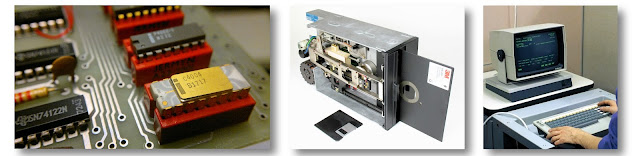
Intel 4004, 8" floppy disk (with 3.5" for comparison), Nokia MikroMikko

Nokia have made many things over their long history, including car tyres. Today you might find Nokian winter tyres on a Nissan Patrol or Toyota Land Cruiser - both these rugged and practical 4X4s were originally launched in 1951 and were heavily inspired by the wartime-era Willys Jeep.
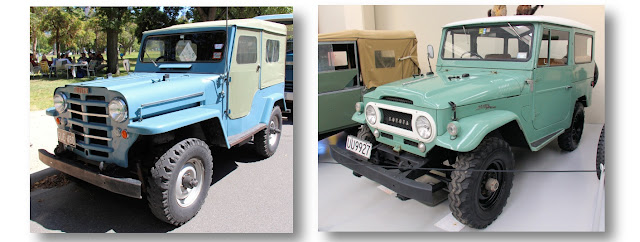
Nissan Patrol (circa 1958) and Toyota Land Cruiser (circa 1966)


If exploring in your Japanese offroader with your Finnish tyres, you probably want a good system to tell you where you actually were in the world. Today you'd use a GPS system, but that wasn't an option back in 1981 when Honda announced the world's first in-car navigation system, the Electro Gyro-Cator. Instead of using satellites, it used inertial navigation and a set of transparent maps fitted over a screen. It was bulky, expensive and of limited use, but eventually the first in-car GPS system was launched in 1990 by Mazda.
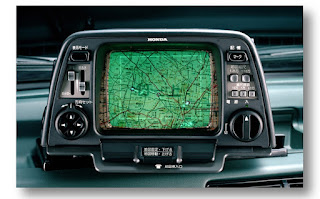
Honda Electro Gyro-Cator

Stretching things out a bit more… if you found yourself off-roading in your big Japanese 4X4 with Finnish tyres in the 1970s or 1980s and you wanted to make a high-quality video recording of your journeys, the choice of professionals was a Sony U-matic recording system which was launched in 1971. Capable of capturing broadcast-quality images, the U-matic was the choice of professionals. Smaller than a traditional film camera, most units were still quite bulky and required a crew of two or three - one for the camera, one for the recorder unit and perhaps one for the microphone boom. Perhaps on your exploration into the wilderness you might want to pack some supplies, and there's a good chance that these might include Heinz Baked Beans, a staple of tinned food since 1901. Luckily the Japanese make some of the best can openers in the world too..
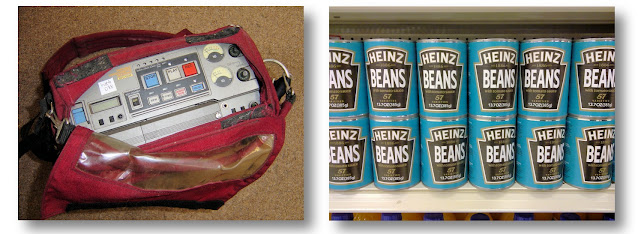
Sony U-matic in a carry bag and Heinz Baked Beans

Image credits:
Nintendo 3DS: Evan-Amos via Wikimedia Commons - CC0
PlayStation Vita: Evan-Amos via Wikimedia Commons - CC0
Nintedo GameCube: BugWarp via Wikimedia Commons - CC BY-SA 4.0
Commodore CDTV: Patric Klöter via Wikimedia Commons - CC BY-SA 3.0
Tempest: Russell Davies via Flickr - CC BY-NC 2.0
Galaga: David via Flickr - CC BY-NC-ND 2.0
Qix: Joho345 via Wikimedia Commons - CC BY-SA 3.0
Intel 4004: Simon Claessen via Flickr - CC BY-SA 2.0
8" floppy disk: Michael Holley via Wikimedia Commons - CC0
Nokia Data MikroMikko: Nokia
Nissan Patrol (1958): Sicnag via Flickr - CC BY 2.0
Toyota Land Cruiser (1966): Sicnag via Flickr - CC BY 2.0
Electro Gyrocator: Honda
Sony U-matic: Joybot via Flickr - CC BY-SA 2.0
Heinz Baked Beans: Ian Kennedy via Flickr - CC BY-NC 2.0